Description
+ Include: videos + file sub vtt, size: GB
+ Target Audience: plastic surgeons, facial plastic surgeons
+ Sample video: contact me for sample video
+ Information:
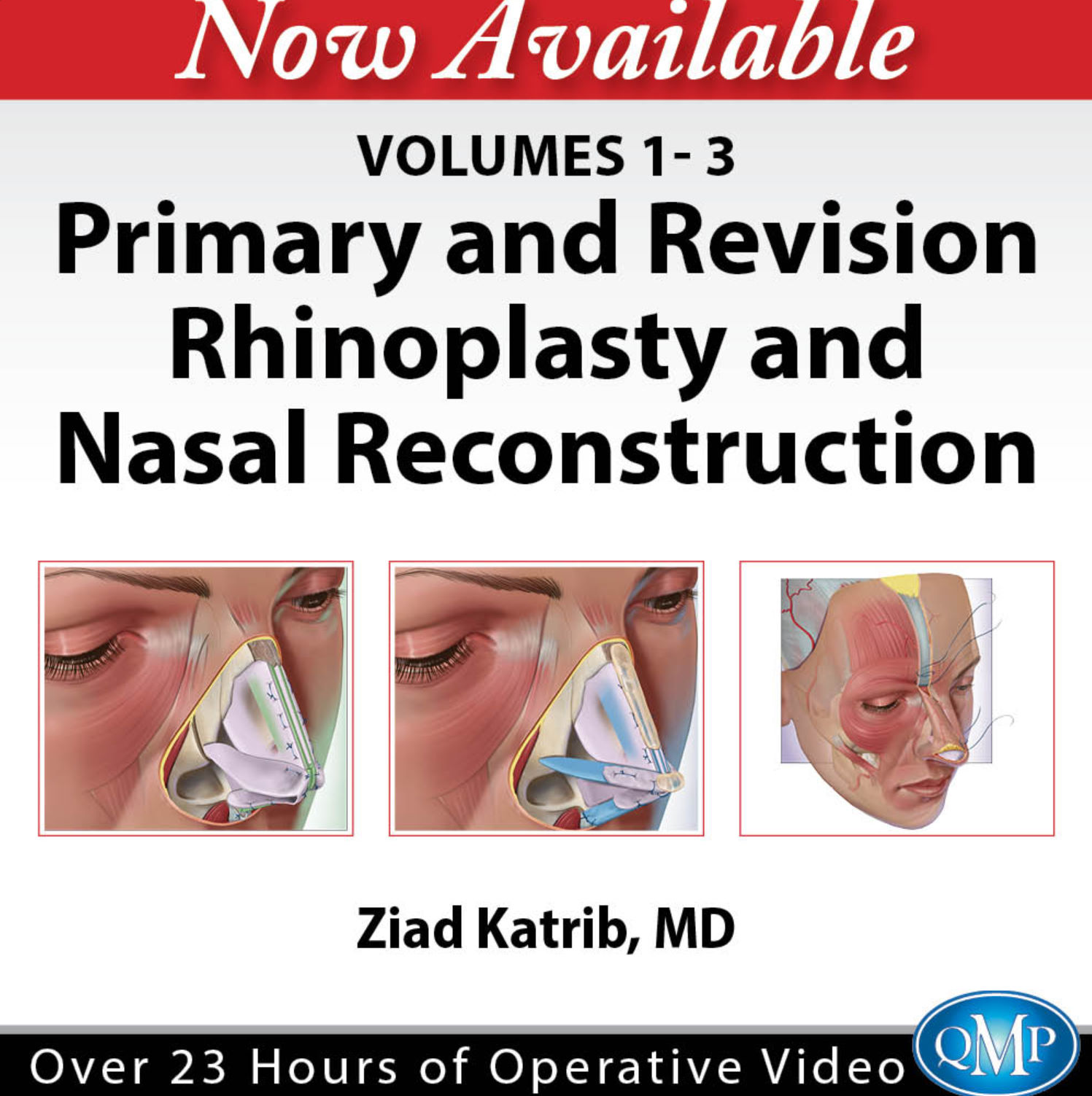
Now Available! From Primary Rhinoplasty to Complex Reconstruction, a 3-Volume Set
10 Cases | Over 23 Hours of Operative Video
Step into the operating room with Dr. Ziad Katrib for a comprehensive surgical video series spanning primary rhinoplasty, revision rhinoplasty, and complex nasal reconstruction. Across Volumes 1-3, viewers will gain an in-depth understanding of the structural principles, operative strategies, and decision-making processes that define Dr. Katrib’s systematic approach to modern rhinoplasty and nasal reconstruction.
Through detailed operative footage and step-by-step narration, this series explores the full spectrum of nasal surgery—from aesthetic refinement and functional restoration to advanced reconstruction of severely compromised noses and complex nasal defects. Emphasis is placed on thoughtful analysis, structural integrity, preservation of the soft tissue envelope, and techniques designed to achieve natural, stable, and reproducible outcomes.
Viewers will observe advanced approaches to primary rhinoplasty, complete reconstruction of the revision nose using structural grafting and rib harvest techniques, and multistage forehead flap reconstruction for large nasal defects involving support, lining, and contour restoration. Throughout the series, Dr. Katrib combines surgical principles with operative execution to provide strategies applicable to both straightforward and more complex cases.
Volume 1: Primary Rhinoplasty: A Structural Approach to Natural and Functional Results
4 Cases | Over 8 Hours of Operative Video
Explore Dr. Katrib’s structural approach to primary rhinoplasty and observe nasal analysis, septoplasty, donor rib spreader graft reconstruction, advanced tip reshaping, and long-term support strategies designed to achieve natural aesthetic and functional outcomes while preserving structural integrity. Surgical Cases:
- Series Introduction With Dr. Katrib
- Case 1 – 23-year-old Female Patient With Crooked Wide Dorsum, Very Large Dorsal Hump, Deviated Septum, and Bulbous Tip: This case demonstrates component reduction of the large dorsal hump, in combination with osteotomies and nasal bone suture fixation to stabilize and narrow the dorsum maximally. A septoplasty and removal of large septal spur is shown, as well as midvault reconstruction with donor rib spreader grafts. A folded septal caudal septal extension graft with ethmoid splint is placed, and depressor septi nasi and PRF membrane camouflage is placed. Primary tip suture-only techniques are performed to refine the bulbous tip.
- Case 2 – 30-year-old Female Patient With Facial and Nasal Asymmetry, Large Dorsal Hump, Thin Skin, Deviated Septum, and Plunging Nasal Tip (Tension Nose): This case demonstrates component reduction of the dorsal hump in combination with nasal bone osteotomies. A full septoplasty is performed, and midvault reconstruction is placed with donor rib spreader grafts. A folded septal caudal septal extension graft is placed with ethmoid splinting, and primary tip reshaping with a lateral crural steal, medial crural overlap, and cranial tip suturing. PRF membranes are also demonstrated for stem cell and camouflage purposes.
- Case 3 – 36-year-old Female Patient With Wide Nasal Bones, Dorsal Hump, Low Radix, Extremely Wide Bulbous Tip, and Deviated Septum: This case demonstrates reduction of the dorsal hump, as well as precise osteotomies to narrow the wide bony pyramid. Septoplasty, as well as donor rib spreader graft placement is performed. A folded septal caudal septal extension graft is placed, and primary tip sutures are performed with lateral crural steal, medial crural overlap, and a radix graft made of depressor septi nasi is used. Intraoperative application of Kenalog solution to minimize swelling is also shown.
- Case 4 – 36-year-old Female Patient With Subtotal Septal Perforation, Severe Cocaine Nose Deformity, and Saddle Nose: This case demonstrates correction of the extreme saddle-nose deformity first with harvest of the seventh, eighth, and ninth ribs with perichondrium intact. Reconstruction of the absent caudal septum is performed with the perichondrially intact ninth rib graft. Large release of the nasal vestibular skin around the pyriform is performed, and placement of the perichondrially intact eighth rib graft suture fixated to the nasal bones is shown. Primary tip suturing is used, and diced rectus fascia is employed in several key areas.
View Volume 1 Details
Volume 2: Revision Rhinoplasty: A Systematic Approach to Consistent Results
3 Cases | Over 9 Hours of Operative Video
In Volume 2, Dr. Katrib demonstrates his systematic approach to revision rhinoplasty, including rib harvest techniques, structural grafting, dorsal augmentation, and complete tip reconstruction. This volume emphasizes restoring support, airway function, and natural form in compromised noses through precise surgical strategies. Surgical Cases:
- Series Introduction With Dr. Katrib
- Case 1 – 42-year-old Female Patient With Saddle Nose, Severe Columellar and Nostril Asymmetry, Small Pollybeak Deformity, and Wide Flat Tip: This case demonstrates harvesting of the seventh and ninth ribs (perichondrium intact), rectus fascia, and free perichondrium. A full septoplasty is performed, and a perichondrially intact ninth rib septal extension graft is used. Raised spreaders are placed to elevate the saddle-nose deformity, and the entire tip is rebuilt using native lateral crural hinges along with refined lateral crural replacement grafts. The bridge and tip are camouflaged, and the supratip scarring is addressed with scoring and supratip control suturing.
- Case 2 – 54-year-old Female Patient With Short Nose, Crooked Nasal Bones, Overrotation of the Tip, Flat Retracted Columella (Previous Tongue in Groove), and Low Upper Dorsum: This case demonstrates harvesting of the seventh and ninth ribs (perichondrium intact), rectus fascia, and free perichondrium. Asymmetric osteotomies combined with unilateral extended spreader grafting is shown to deal with the crooked upper third. A perichondrially intact ninth rib septal extension graft and extended spreaders are shown, as well as tip reconstruction with lateral crural strut grafts for tip and external valve reconstruction. Augmentation of the upper half of the dorsum with perichondrium and ultra diced fascia and cartilage is demonstrated as well.
- Case 3 – 55-year-old Female Patient With Wide Nasal Bones, Extreme Saddle Nose, Severe Overrotation of the Nasal Tip, and Flat Retracted Columella: This case demonstrates harvesting of the eighth and ninth ribs (perichondrium intact), rectus fascia, and free perichondrium. Very large bone movement is shown with a combination of power tools and hand saws to narrow the extremely wide bony pyramid. Reconstruction of the surgically absent caudal and dorsal septum is shown with raised, notched spreader grafts and the perichondrially intact ninth rib septal replacement graft fixated to the nasal spine for full bony anchoring and maximal derotation. Total tip reconstruction with lateral crural hinges attached to latera crural replacement grafts is shown, as well as various camouflage techniques of the tip, bridge, and midvault.
View Volume 2 Details
Volume 3: Forehead Flap Nasal Reconstruction: Principles & Practice
3 Cases | Over 6 Hours of Operative Video
Focused on the management of large and complex nasal defects, this volume demonstrates two-stage, three-stage, and four-stage forehead flap reconstruction techniques. Dr. Katrib guides viewers through defect analysis, structural grafting, airway preservation, and staged reconstruction strategies based on the principles of Dr. Fred Menick to achieve functional and aesthetic outcomes. Surgical Cases:
- Series Introduction With Dr. Katrib
- Case 1 – 73-year-old Female Patient With Three-Stage Full-Thickness Paramedian Forehead Flap for Subtotal, Large Skin and Soft Tissue Defect of the Tip, Dorsum, and Soft Triangles After Resection of an Invasive Nasal Melanoma: This case—shown in three videos—demonstrates the re-creation of the defect after time has passed and healing has occurred. Rib cartilage is used to place strong tip support with a columellar strut graft, as well as primary tip suture techniques of the patient’s cartilage to create an increase in tip definition. Rib tip grafting and alar rim grafting are also demonstrated. A three-stage, full-thickness forehead flap is used secondary to the large surface area of the flap. The second intermediate stage demonstrates the re-elevation of the entire forehead flap, as well as thinning of the entire substructure to safely create more tip definition. Tacking sutures are also shown to prevent fluid accumulation and further enhance the final result. The third and final stage shows the management of the pedicle, medial eyebrow, and further thinning over the superior portions of the flap on the nose and inset of the flap. Tacking sutures are again used to minimize fluid accumulation and subsequent scar tissue formation.
- Case 2 – 63-year-old Female Patient With Four-Stage Full-Thickness Folded Paramedian Forehead Flap for Subtotal, Large Skin and Soft Tissue Defect Of The Tip, Lower Dorsum, and Full Thickness Defect of the Left Nasal Ala: This case—shown in four videos—demonstrates re-creation of the nasal defect and rib structure placement during the first stage with a columellar strut graft, as well as a primary left alar rib batten graft to prevent retraction of the thin folded forehead flap. A folded, full-thickness flap is used to re-create the internal (lining) defect of the left nasal ala. Management of the large forehead defect with a wound matrix dressing is shown as well. The second intermediate stage demonstrates re-elevation of the entire forehead flap, and replacement of the flat, straight rib batten graft with the correct delayed primary convex ear cartilage batten graft. The flap is thinned and replaced, and tacking sutures are used. The third stage shows the management of the pedicle, medial eyebrow, and further thinning over the superior portions of the flap on the nose and inset of the flap. Tacking sutures are again used to minimize fluid accumulation and subsequent scar tissue formation. Nostril retainers are used to preserve the correct shape and size of the nostril during this entire process. The fourth and final stage shows the re-creation of the left alar crease to better contour the nose, and further debulking of the nasal sidewall. Tacking sutures are again used to minimize fluid accumulation and retain the refined shape created in surgery more effectively.
- Case 3 – 63-year-old Female Patient With Two-Stage Forehead Flap for Nasal Tip Subunit Reconstruction: This case—shown in two videos—demonstrates the subunit principle, with an over 50% defect of the nasal tip and subsequent excision of the nasal tip subunit. Primary tip suturing is used to improve tip definition, and a thin two-stage forehead flap is performed to fully replace the entire tip subunit. Primary tacking sutures are used. The second and final stage shows the management of the pedicle, medial eyebrow, and further thinning of the superior portion of the flap. Tacking sutures are again used in this stage.
View Volume 3 Details
A Complete Rhinoplasty and Nasal Reconstruction Experience
Together, Volumes 1-3 provide an educational journey through primary rhinoplasty, revision rhinoplasty, and complex nasal reconstruction. From foundational structural concepts to advanced reconstructive strategies, Dr. Katrib shares the techniques, operative planning, and surgical philosophy that guide his approach to achieving natural, functional, and long-lasting outcomes.
Whether you are refining your primary rhinoplasty techniques, tackling challenging revision cases, or expanding your reconstructive skill set, this series offers practical insight and step-by-step operative guidance designed to elevate your surgical decision-making and technical execution.
Now Available in HD Streaming format. 10 cases with over 23 hours of operative video. Available September 2026.




Reviews
There are no reviews yet.