Description
+ Include: 8 videos + 8 audios + 8 file sub vtt, size: 6.77 GB
+ Target Audience: pediatric dentists, orthodontists, general dentists treating children, and dental hygienists
+ Sample video: contact me for sample video
+ Information:
7 lessons + 1 free (11h 26min)
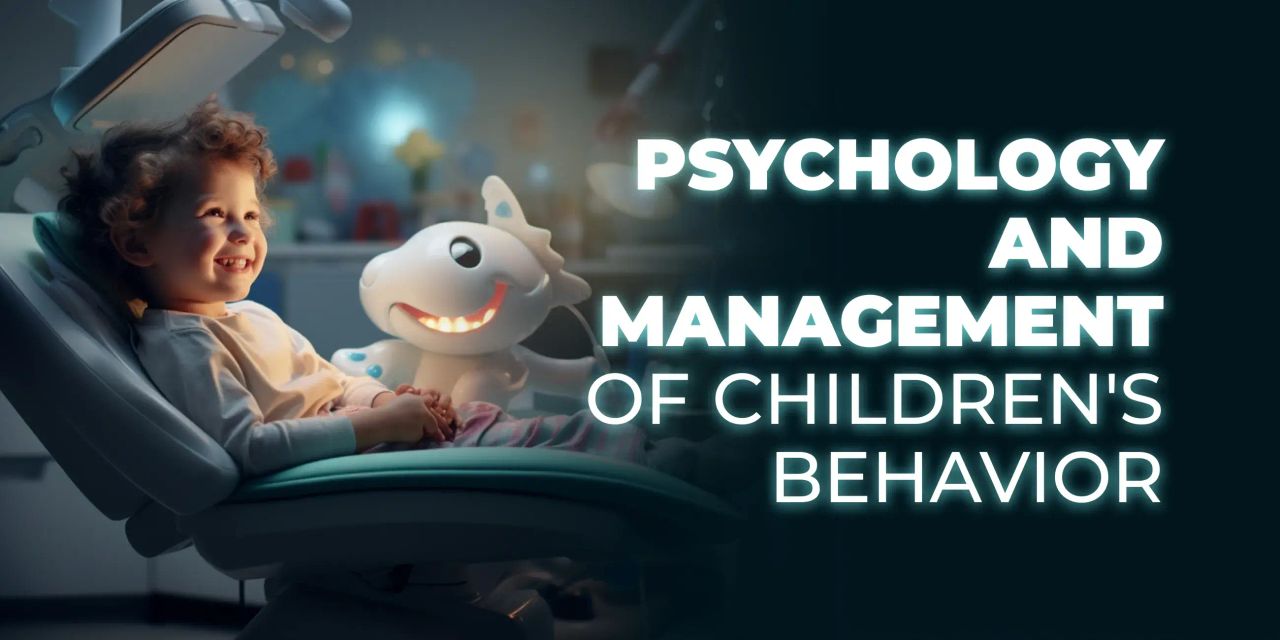
Online course on child psychology and behavior management.
Training consists of 4 blocks:
– Child psychology. Verbal and non-verbal communication
– Pharmacological methods of management
– Psychology of communication “PARENT – DOCTOR”
– Treatment of children with psychological peculiarity: anxiety and depression.
The course is сreated for all doctors who work with children and teenagers.
👩⚕️ Who Should Enroll
- Pediatric dentists managing children’s dental care and needing advanced behavioral strategies.
- Orthodontists treating young patients where cooperation is crucial for appliance success.
- General dentists who regularly see children and want to improve chairside communication and management.
- Dental hygienists & assistants supporting pediatric care and patient interaction.
- Residents & fellows in pediatric dentistry or orthodontics seeking structured training in child psychology and behavior management.
📚 What You’ll Learn
- Child psychology fundamentals: understanding developmental stages and emotional responses in dental settings.
- Behavior management techniques: tell‑show‑do, positive reinforcement, distraction, and desensitization.
- Communication strategies: building trust and rapport with children and parents.
- Clinical protocols: managing anxiety, fear, and uncooperative behavior during treatment.
- Interdisciplinary integration: combining psychology with pediatric dentistry and orthodontics for long‑term success.
- Case‑based lessons: real examples of behavior management in pediatric dental practice.
+ Topics:
Lesson 1.Non pharmacological behavior management
– Behavior management: basic principles
– Scientific foundations for the management of child behavior
– Factors of poor communication of the child: indications and contraindications for non-pharmacological methods
– The influence of parents and parenting style: the relationship with the behavior of the child
– Dental team: aspects of successful communication
– Basic and advanced non-pharmacological methods of behavior management:
– communication and communication guidance (appropriate to age)
– positive pre-visit imagery
– direct observation
– tell-show-do
– ask-tell-ask
– voice control
– non-verbal communication
– positive reinforcement and descriptive praise
– distraction
– memory restructuring
– desensitization to dental conditions
– enhancing control.
– Documentation of admission and individualization of the treatment plan
– Sensory-adapted dental environment (SADE technique)
– Animal-аssisted Therapy (AAT)
– Picture exchange communication system (PECS)
– A technique of protective stabilization.
Recommended for: Pediatric dentists.
Lesson 2.Pharmacological behavior management. Introductory lesson
– Goals and indications for general anesthesia:
– Age and weight of the child
– Health status
– Amount of tretment
– Cooperation
– Parental preferences.
– Nitrous oxide: clinical effect, indications and safety of use
– Contraindications for nitrous oxide
– Sedation levels: characteristics and benefits of moderate sedation
– Specific pharmacological agents in pediatric dentistry, features and details of use:
– Midazolam
– Triazolam
– Flumazenil
– Hydroxyzine
– Diphenylhydramine
– Drug combinations.
Recommended for: Pediatric dentists.
Lesson 3.Pharmacological behavior management
– Goals and indications for general anesthesia:
– Age and weight of the child
– Health status
– Amount of tretment
– Cooperation
– Parental preferences.
– Nitrous oxide: clinical effect, indications and safety of use
– Contraindications for nitrous oxide
– Sedation levels: characteristics and benefits of moderate sedation
– Specific pharmacological agents in pediatric dentistry, features and details of use:
– Midazolam
– Triazolam
– Flumazenil
– Hydroxyzine
– Diphenylhydramine
– Drug combinations.
– Scheme for selecting drugs by age
– Local anesthetics: interaction with general sedatives
– Levels of monitoring of the patient’s condition
– Documentation of admission: child behavior, treatment and informed consent.
Recommended for: Pediatric dentists.
Lesson 4.Stages of reducing the time of dental treatment in children under general anesthesia
– Indications of treatment under general anesthesia
– Basic preparation principles of a treatment plan
– Tactics of management of the postoperative period
– Stages of treatment under general anesthesia:
– Consultation (doctor’s stage and coordinator’s stage)
– Organization of the treatment process
– Isolation of the working field.
– Treatment of dental caries and chronic pulpitis: a clinical example
– Procedures where you can save time
– Preparation stage: selection of the tip and burs
– Features of endodontic treatment under general anesthesia
– The process of waking up and communicating with patients after treatment.
Recommended for: Pediatric dentists.
Lesson 5.Dentist, child, parent: communication techniques
– Dental fear, anxiety and odontofobia: definition
– Factors of dental anxiety development:
– Age of the child
– Character traits
– Parental influence.
– Diagnosis of dental anxiety: the Frankl scale
– Prevention of anxiety: techniques
– Communication techniques with a small patient
– The 4 “S” principles by reducing triggers of stress
– Basic behavior guidance techniques
– The presence of parents during treatment: tactics
– Pharmacological techniques of behavior management: tasks and indications.
Recommended for: Pediatric dentists.
Lesson 6.Depression and anxiety in our patients: challenges and implications for the dental practitioner
– Anxiety and depression among children and adolescents
– Child’s fears: norm and pathology
– Factors of development of anxiety and depression in children
– Depression: definition and diagnostic criteria
– Symptoms of anxiety and depression in children and adolescents
– Body dysmorphia syndrome
– Strategies and principles of treatment of anxiety and depression
– The role of digital technologies in the development of depression and anxiety in children and adolescents: cyberbullying
– 8 online factors that increase the propensity to suicide.
Recommended for: Pediatric dentists.
Lesson 7.NLP in Pediatric Dentistry
– The importance of NLP in pediatric dentistry
– 6 basic principles of NLP
– Communication mechanisms in NLP
– Sensory organs as a way of creating reality: representative patterns:
– Characteristics of the visual type of perception
– Characteristics of the auditory type of perception
– Characteristics of the kinaesthetic type of perception.
– 3 V communications: how to see and hear a child
– The technique of mirroring gestures
– The technique of repeating the child’s breathing
– Verbal respiratory synchronization
– Effective communication: flexibility in thinking and behavior
– NLP Techniques:
– Anchoring technique
– The “High five” technique
– Reframing technique
– Swish pattern technique
– The “Loop Break” technique
– Pattern interrupt technique
– Technique of embedded commands
– The Zen mind trick.
– Deletion, generalization, distortion: language-meta-models and the Milton model
– Principles of basic communication when working with children
– Child’s bad behavior: tactics.
Recommended for: Pediatric dentists.
Lesson 8.Conversational hypnosis in pediatric dentistry
– Hypnosis: myths and misunderstandings
– Conversational hypnosis: a scientifically based approach
– Overt and covert hypnosis: goals and indications for the use of hypnosis
– Hypnotic state: the ABS formula
– Conversational hypnosis techniques to induce trance:
– Interrupting the dialog
– Overlap realities
– Verbal confusion
– Vague sentences
– Basic hypnotic formula.
– Basic communication principles of working with children
– Words and their meaning in working with children. The Milton model.
Recommended for: Pediatric dentists.


Reviews
There are no reviews yet.