Description
+ Include: videos + file sub vtt, size: GB
+ Target Audience: Orthodontists, Pediatric Dentists, and Restorative Dentists
+ Sample video: contact me for sample video
+ Information:
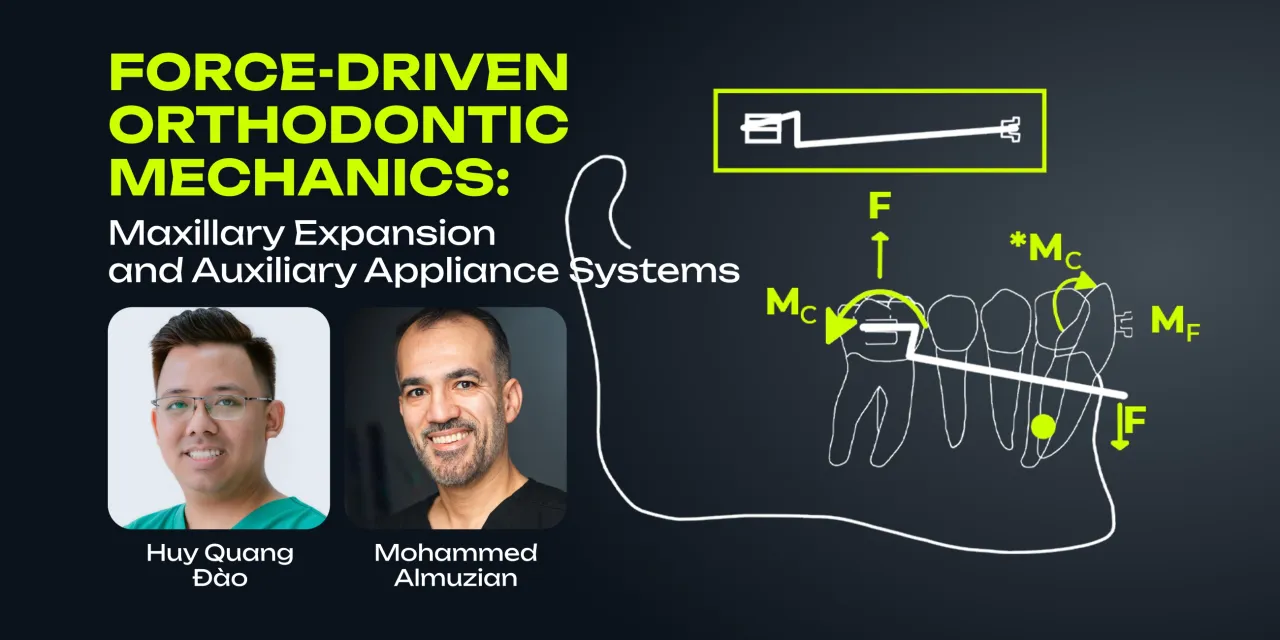
Explore force-driven orthodontic mechanics with a focus on maxillary expansion, transverse correction, and auxiliary appliance systems, bridging classical orthodontic principles with modern evidence-based protocols. This course provides a deep understanding of the biomechanics behind RME appliances, transpalatal arches, quad helices, Nance appliances, and the Ricketts utility arch, empowering clinicians to design and execute predictable, efficient treatment plans.
Learning Objectives
-
Apply design, bonding, and activation protocols for rapid maxillary expansion (RME).
-
Navigate clinical decision-making for expansion timing in growing and adult patients.
-
Master the biomechanics and application of transpalatal arches, quad helices, and Nance appliances.
-
Execute segmental maxillary distalization using the Ricketts utility sectional arch.
-
Evaluate force systems, center of resistance, and control of unwanted side effects.
-
Implement activation protocols and compensatory mechanics in utility arch systems.
Target Audience
This program is designed for dental practitioners looking to master force-driven mechanics, refine their use of auxiliary appliances, and apply evidence-based protocols for transverse correction and maxillary expansion.
Best for Orthodontists, Pediatric Dentists, and Restorative Dentists.
Topics
Lesson 1. Maxillary Expanders: History and Clinical Use
-
Historical context and evolution of maxillary expanders
-
Clinical and theoretical concepts of maxillary expansion
-
Determining the required amount of expansion in different clinical cases
-
Mode of actions of RME
-
Design characteristics of rapid maxillary expanders
-
Evidence supporting different expansion protocols
-
Clinical application and customization of expander design
Lesson 2. Design, Bonding Protocols, and Activation Protocols for Rapid Maxillary Expansion
-
Design options for rapid maxillary expanders (RME)
-
Working with CAD/CAM RME
-
Bonding and banding protocols of RME
-
Activation protocols for effective expansion
-
Protocols for Class 3 malocclusion cases
-
Timing of rapid maxillary expansion based on age and dental development
-
Case study analysis of different protocol approaches
-
Personalized planning for timing and activation in clinical practice
Lesson 3. Adult Expansion and Risks: Controversies and Updates in Maxillary Expansion
-
Challenges of maxillary expansion in adult patients
-
Risks and complications of adult maxillary expansion
-
Latest research and updates on expansion techniques
-
Controversies and differing clinical viewpoints
-
Risk mitigation strategies in adult cases
-
Application of updated knowledge for improved safety and outcomes
Lesson 4. Transpalatal Arches, Quad Helices, and Nance Appliances: Modern Orthodontic Tools
-
Functional roles of transpalatal arches, quad helices, and Nance appliances
-
Advantages and disadvantages of different appliances
-
Clinical indications and contraindications
-
Design variations and customization options of transpalatal arches, quad helices, and Nance appliances
-
Case analysis of appliance use in orthodontic treatment
-
Integration of appliances into treatment planning best practices
Lesson 5. Segmental Distalization of the Maxilla Using Ricketts Utility Sectional Arch
-
Force vectors and defining the center of resistance
-
Analysis of the side effects of different distalization protocols
-
The design of the Ricketts utility sectional arch
-
Distalization with Class II elastics and application of third-order bends
-
Application of the Ricketts utility sectional arch with miniscrews
-
Video demonstrations: step-by-step protocols of wire bending and fabrication of the Ricketts utility sectional arch
-
Side effects of distalization and application of the Ricketts utility sectional arch: correction protocols
Lesson 6. Activation Protocols and Clinical Applications of the Ricketts Utility Arch
-
Protocols of specific activation components
-
Anchorage with toe-in activation bend of the Ricketts utility sectional arch
-
Management of inclination and angulation with compensatory bends on the utility arch and application of intermaxillary elastics
-
Analysis of clinical cases


Reviews
There are no reviews yet.