Description
+ Include: videos + file sub vtt, size: GB
+ Target Audience: Periodontists, Implantologists, Oral and Maxillofacial Surgeons, and Restorative Dentists
+ Sample video: contact me for sample video
+ Information:
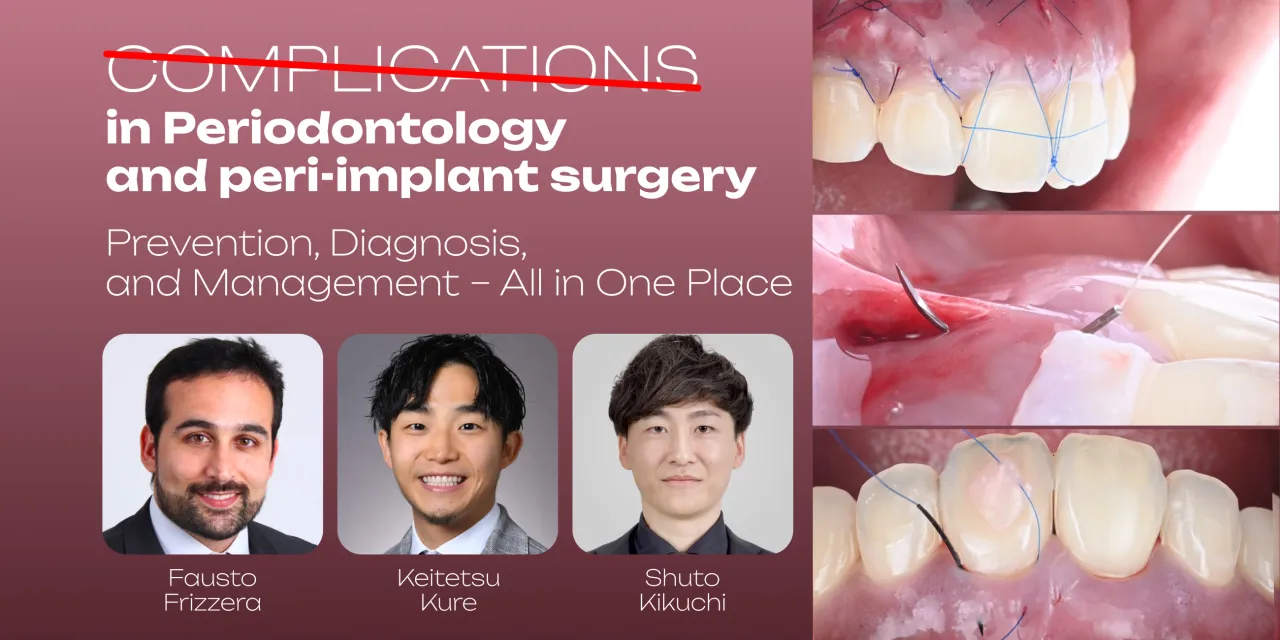
Complications in periodontology and peri-implant surgery are no longer viewed as isolated adverse events, but as structured biological responses that can be analyzed, classified, and systematically managed. This course builds a unified clinical framework that integrates soft tissue breakdown, peri-implant disease progression, and regenerative failure into a single decision-making pathway. It focuses on prevention, diagnostic accuracy, and stepwise treatment planning to transform complications into predictable, treatable conditions.
Learning Objectives
-
Systematically diagnose and classify peri-implant soft tissue defects, including volume loss, recession, and papilla deficiencies.
-
Implement evidence-based prevention and management of soft tissue complications around dental implants.
-
Apply contemporary surgical approaches for peri-implantitis, including decontamination and defect-driven decision-making.
-
Execute regenerative and resective strategies for peri-implant bone loss and surgical complications.
-
Analyze and troubleshoot Guided Bone Regeneration (GBR) failures using secondary reconstruction protocols.
-
Perform microsurgical approaches to mucogingival reconstruction, including tunneling techniques and connective tissue grafting protocols.
-
Develop long-term maintenance strategies to improve clinical stability and reduce the recurrence of complications.
Target Audience
This course is intended for dental professionals who manage complex periodontal and peri-implant soft and hard tissue complications, focusing on advanced diagnosis, surgical intervention, and regeneration.
Best for Periodontists, Implantologists, Oral and Maxillofacial Surgeons, and Restorative Dentists.
Topics
Lesson 1. Peri-Implant Soft Tissue Defects: Diagnosis and Complications
-
Clinical diagnosis of peri-implant soft tissue defects
-
Assessment of soft tissue volume loss
-
Peri-implant soft tissue recession
-
Loss of interproximal papilla and esthetic compromise
-
Surgical technique-related complications
-
Prosthetic-driven soft tissue alterations
-
Prevention of esthetic failures around implants
Lesson 2. Management of Soft Tissue Complications Around Dental Implants: Prevention, Diagnosis, and Treatment
-
Diagnosis and classification of peri-implant soft tissue alterations
-
Prevention of soft tissue complications in esthetic implant sites
-
Clinical decision-making: treatment indications, timing, and prognosis
-
Peri-implant plastic surgery techniques for soft tissue reconstruction
-
Implant removal, site preservation, and soft tissue reconstruction following implant failure
Lesson 3. Surgical Management of Peri-Implantitis: Contemporary Approaches to Implant Complications
-
Clinical and radiographic diagnosis of peri-implantitis
-
Implant surface decontamination techniques
-
Classification and management of peri-implant bone defects
-
Regenerative surgical approaches for peri-implantitis
-
Resective surgical procedures and clinical indications
-
Long-term maintenance protocols and supportive peri-implant therapy
Lesson 4. Root Coverage and Papilla Reconstruction: Advanced Surgical Techniques and Clinical Protocols
-
Classification of gingival recessions: Miller and Cairo system
-
Clinical diagnosis and treatment planning for root coverage procedures
-
Incision design, flap elevation, and microsurgical suturing principles
-
Management of suprabony and intrabony periodontal defects
-
Partial-thickness and split-full-split (mixed-thickness) flap techniques
-
Supracrestal (supra-alveolar) periodontal tissue reconstruction protocols
-
Interproximal tunneling with customized connective tissue grafts
-
Connective tissue graft (CTG) techniques for papilla reconstruction
-
Microsurgical suturing techniques: interrupted interproximal sling and double-crossed sutures
-
Prevention and management of complications in root coverage surgery
-
Step-by-step analysis of clinical cases and treatment outcomes
Lesson 5. Rethinking GBR Success: Managing Failures and Achieving Predictable Bone Regeneration
-
Biological principles of bone regeneration
-
Indications and objectives of GBR
-
Factors influencing predictable regenerative outcomes
-
Principles of wound healing and space maintenance
-
Aetiology of GBR failures:
-
Surgical factors: flap design, tension-free closure, membrane handling, and infection control
-
Patient-related risk factors: systemic conditions, smoking, oral hygiene, and compliance
-
Material-related factors: graft selection, membrane characteristics, stability, and fixation
-
Biological and mechanical causes of regenerative failure
-
-
Classification and diagnosis of GBR complications:
-
Early versus late complications
-
Partial versus complete graft loss
-
Soft tissue dehiscence and membrane exposure
-
Clinical and radiographic assessment of compromised regenerative sites
-
-
Review of representative GBR failure cases
-
Identification of surgical errors and contributing risk factors
-
Clinical decision-making based on radiographic and intraoperative findings
-
Management of failed GBR procedures
-
Immediate versus delayed intervention strategies
-
Management of membrane exposure and infection
-
Secondary grafting techniques and site reconstruction
-
Criteria for retreatment and achieving predictable outcomes
-
Prevention and long-term success


Reviews
There are no reviews yet.