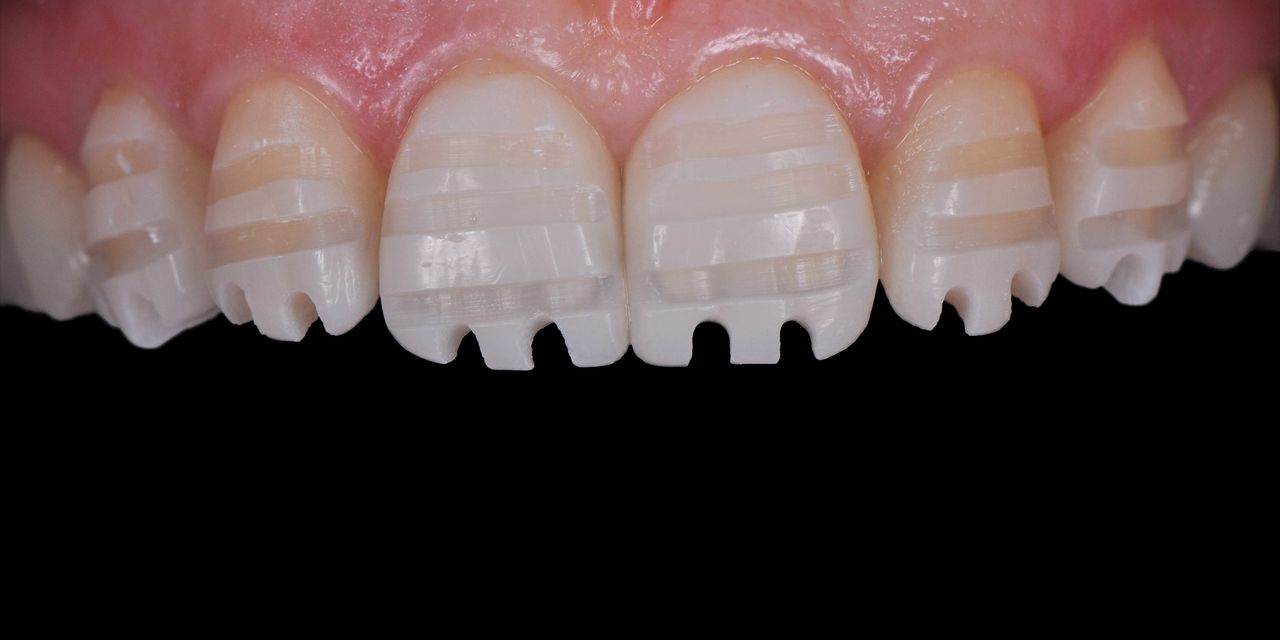
Description
+ Include: 4 videos + 1 pdf, size: 1.97 GB
+ Target Audience: restorative dentists & prosthodontists
+ Sample video: contact me for sample video
+ Information:
4 lessons 6h 11m
On the online course “Ceramic restorations: veneers, inlays, crowns” you will learn the clinical and laboratory stages of manufacturing the most demanded ceramic restorations:
– inlays, onlays and crowns for anterior and posterior teeth
– using CAD/CAM technologies and ceramics layering
– made of feldspar ceramic, lithium disilicate and zirconium dioxide
– for vertical and classic tooth preparation
– on natural teeth and on implants
– the latest chips and life hacks of prosthetics with metal-free structures.
Who is this course actually for?
-
Restorative Dentists & Prosthodontists: Practitioners looking to refine their clinical protocols for preparing and placing modern ceramics.
-
Dental Technicians: Lab professionals wanting to align their digital and analog workflows with the clinical steps of the dentists they collaborate with.
Course Overview (6h 11m / 4 lessons)
Taught by Dr. Giuseppe Marchetti, Dr. Fabio Scutella, and Dr. Eric van der Winden, this specific OHI-S module focuses on modern protocols for indirect dental restorations. Key focus areas include:
-
Restoration Types: Step-by-step clinical workflows for fabricating and placing veneers, inlays, onlays, and crowns for both anterior and posterior teeth.
-
Preparation Techniques: Navigating classic tooth preparation versus vertical preparation methodologies.
-
Materials & Technology: Combining CAD/CAM digital technologies with manual ceramic layering techniques using materials like feldspar ceramic, lithium disilicate, and zirconium dioxide.
If you are a working dental professional, this 6-hour investment provides highly actionable protocols that can be immediately applied in a clinic or lab.
+ Topics:
– LESSION 1: CERAMIC POSTERIOR RESTORATIONS: INLAYS, ONLAYS, OVERLAYS, CROWNS
Indirect ceramic restorations: indications;
– Stages of creating indirect ceramic restoration:
• Isolation of the working field,
• Removal of carious tissues,
• Build up,
• Adhesive techniques,
• Preparation of posterior teeth for inlays, onlays, crowns,
• Impressions/scanning,
• The lab work: material selection,
• Fitting restoration,
• Fixing the restoration,
• Finishing and polishing;
– Selection of material for the restoration of posterior teeth;
– Overlap of the tubercles of posterior teeth: indications;
– Advantages and disadvantages of indirect restorations;
– Inlays: indications, survival rate, benefits of use;
– Osteoresection: technique and indications.
LESSION 2: CERAMIC ANTERIOR RESTORATIONS: VENEERS AND CROWNS
– Ceramic veneers: indications;
– Planning of treatment with ceramic restorations;
– Additive restorations: advantages and disadvantages;
– Step-by-step protocol for making ceramic restorations: material selection, scanning, digital smile design, Wax-up, Mock-up;
– Partial indirect composition restoration: protocol;
– Features of the preparation of anterior teeth:
• On the vestibular surface,
• In the cervical region,
• On the proximal surface;
– Silicon guides for the preparation in anteriors;
– The minimum thickness of the veneer, depending on the manufacturing method;
– Adhesive veneers fixation protocol;
– Interdisciplinary approach in the manufacture of aesthetic restoration.
LESSION 3: COMBINATION OF CAD/CAM AND LAYERING
– Restoration planning and digital smile design;
– 14 aspects of an aesthetic smile;
– Failures in fixing ceramic restorations;
– Feldspatic ceramics vs lithium disilicate;
– Avoiding chipping of veneered restorations;
– Wax infection technique: advantages;
– The technique of manual polishing of the ceramic surface;
– Soft tissues: methods of maintaining pink aesthetics;
– Optimizing the communication between the laboratory and the clinic;
– Combination of CAD/CAM and craftwork in pressed ceramics techniques.
LESSION 4: VERTICAL PREPARATION FOR ALL-CERAMIC RESTORATIONS
– Finish line geometry: the value of the vertical geometry;
– Soft tissue recession around ceramic restorations: multifactorial phenomenon;
– Vertical preparation and gingitage: key aspects;
– Vertical preparation vs horizontal preparation;
– Gingitage: preparation technique and healing time of soft tissues;
– Basic principles of the biological width concept;
– Protocol of vertical preparation of teeth;
– Restoration materials: metal-free ceramics;
– Double retraction thread technique;
– Problems of application of tetragonal zirconium dioxide;
– Cubic zirconia vs tetragonal zirconium dioxide;
– Lithium disilicate: recommendations for clinical use;
– Additional laminate veneers: indications;
– Simplified prosthetic protocol (SPP).



Reviews
There are no reviews yet.