Description
+ Include: 37 videos + 2 pdfs, size: 13.02 GB
+ Target Audience: neurosurgeons, neurosurgery residents and fellows, and neuro-anesthesiologists
+ Sample video: contact me for sample video
+ Information:
Evidence-Based Neurosurgical Board Prep
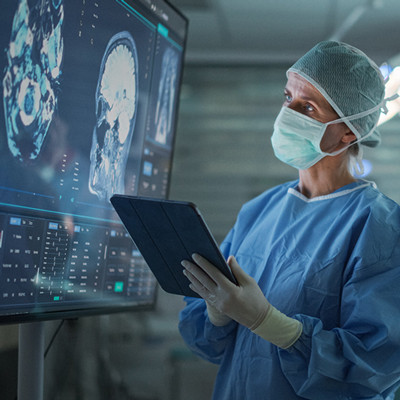
Inclusive and broad in scope, Neurosurgery – A Comprehensive Review is an online video program that helps you strengthen your practice across the full spectrum of neurosurgery. Review every major subspecialty area, from vascular, head injury and craniocerebral trauma, spinal surgery, peripheral nerves, brain, spine, and spinal cord tumors, to skull base lesions, pituitary tumors and craniopharyngiomas, hydrocephalus and cysts, functional neurosurgery, and special topics.
The continuing medical education lectures — given by experienced and authoritative faculty from highly regarded institutions — are expertly informed, evidence based, and guideline driven. You’ll acquire and master the combined technical clinical skills, analytical abilities, communication skills, and compassion needed as you diagnose and treat a vast range of neurological conditions. The course equips you with technical and nontechnical neurosurgical skills while helping to achieve the best clinical outcomes.
Date of Original Release: April 30, 2026
Learning Objectives
At the completion of this activity, participants will be able to:
- Apply structured clinical reasoning to select diagnostic tests and treatment strategies that challenge initial assumptions
- Integrate imaging, neurophysiologic data, and intraoperative findings to guide operative planning and adjustments
- Select appropriate management strategies based on patient- and disease-specific factors
- Implement evidence-based perioperative and postoperative management strategies to improve surgical outcomes
- Modify management strategies in response to new clinical or intraoperative information
- Apply guideline-concordant decision-making to reduce unnecessary testing and overtreatment
- Identify common diagnostic errors, cognitive biases, and guideline misapplications that impact neurosurgical decision-making
Intended Audience
This educational activity is designed for neurosurgeons, neurosurgery residents and fellows, and neuro-anesthesiologists.
+ Topics:
Vascular
Ischemic and Hemorrhagic Stroke – Hakeem Shakir, MD
Intracranial Aneurysms – Andrew Bauer, MD
Intracranial Vascular Malformations – Gary K. Steinberg, MD, PhD
Moyamoya Disease – Gary K. Steinberg, MD, PhD
Contemporary Carotid Endarterectomy – Christopher M. Loftus, MD
Cerebrovascular Emergencies – An Endovascular Perspective – Bradley Gross, MD
Head Injury/Craniocerebral Trauma
Closed Head Injury – Concussion and Head Injury in Sports – William P. Meehan III, MD
Blunt and Penetrating Paranasal Sinus Injuries – Modern Lessons from Ukraine – Rocco A. Armonda, MD, FACS
Management of Severe Traumatic Brain Injury – Ryan S. Kitagawa, MD
Decompressive Craniectomy for Traumatic Brain Injury – Jamie S. Ullman, MD, FACS, FAANS
Spinal Surgery
Cervical Spine Trauma – John H. Chi, MD, MPH
Management of Thoracolumbar Spine Trauma and Stabilization Techniques – Charles A. Sansur, MD, MHSc
Disc Herniations – Cervical, Lumbar, and Thoracic – Charles A. Sansur, MD, MHSc
Minimally Invasive Spine Surgery – Praveen V. Mummaneni, MD, MBA
Hydromyelia and Syringomyelia – Charles A. Sansur, MD, MHSc
Peripheral Nerves
Acute Nerve Injury and Repair – Mark A. Mahan, MD, FAANS
What’s New with Peripheral Nerve Tumors and Lesions – Robert J. Spinner, MD
Reconstructive Strategies for Brachial Plexus Injuries – Susan E. Mackinnon, MD
Compression Neuropathies – Christopher J. Winfree, MD, FAANS
Surgical Management of Weakness and Paralysis – Restorative Techniques – Justin M. Brown, MD, FAANS
Interpreting Electrodiagnostic Studies for Management of Nerve Injuries – Susan E. Mackinnon, MD
Brain Tumors
Modernizing the Approach to Solid Tumor Brain Metastases – Peter E. Fecci, MD, PhD
Malignant Gliomas – Charles S. Cobbs, MD
Meningiomas – Ossama Al-Mefty, MD, FACS
Low-Grade Gliomas – Nader Sanai, MD, FAANS, FACS
Pineal Region Tumors – Jeffrey N. Bruce, MD, FACS
Vestibular Schwannomas – Kaith K. Almefty, MD
Stereotactic Radiosurgery for Arteriovenous Malformations – Contemporary Approaches and Future Possibilities – Jason Sheehan, MD, PhD, FACS
Spine and Spinal Cord Tumors
Metastatic Tumors of the Spine – John F. Burke, MD, PhD
Skull Base Lesion
Meningiomas of the Skull Base and Other Skull Base Lesions – Ian F. Dunn, MD, FACS, FAANS
Skull Base Surgical Approaches – Ian F. Dunn, MD, FACS, FAANS
Pituitary Tumors and Craniopharyngiomas
Non-Functioning and Functioning Pituitary Tumors – Nelson M. Oyesiku, MD, PhD, FACS
Endoscopy for Pituitary Surgery – Gabriel Zada, MD
Endoscopic Endonasal Skull Base Surgery for Craniopharyngiomas – Daniel Prevedello, MD
Functional Neurosurgery
Functional Neurosurgery – Epilepsy and Movement Disorders Surgery – John Rolston, MD
Special Topics
Neurofibromatosis – Ashok R. Asthagiri, MD
von Hippel-Lindau Disease – Ashok R. Asthagiri, MD


Reviews
There are no reviews yet.