Description
+ Include: videos + file sub vtt, size: GB
+ Target Audience: internists, primary care physicians, geriatricians, infectious disease specialists, psychiatrists
+ Sample video: contact me for sample video
+ Information:
1. Overview
-
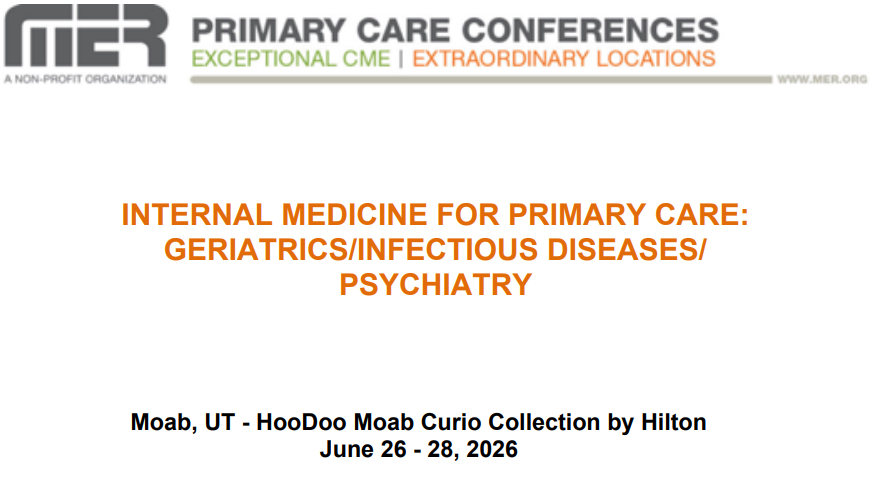
Conference Name: Internal Medicine for Primary Care: Geriatrics/Infectious Diseases/Psychiatry.
-
Organizer: Medical Education Resources (MER), a non-profit organization.
-
Date: June 26-28, 2026.
-
Location: HooDoo Moab Curio Collection by Hilton in Moab, UT.
2. Learning Objectives
Upon completion of this program, participants should be better able to:
-
Review epidemiology and microbiology of skin and soft tissue infections (SSTI).
-
Evaluate the severity of diarrhea and evaluate the need for treatment.
-
List common causative pathogens for various respiratory tract infections.
-
Diagnose and manage genitourinary infections.
-
Utilize a comprehensive geriatric assessment to identify potential issues in the elderly patient.
-
Review common lower urinary tract symptoms (LUTS) that may progress to urinary incontinence, and initiate treatment options.
-
Diagnose and treat cognitive impairment, dementias, and Alzheimer’s disease.
-
Discuss strategies for the management of difficult behaviors in patients with dementia without the use of psychotropic medications.
-
Compare the benefits and side effect profiles of pharmacologic treatment options for ADHD.
-
Describe strategies for identifying and treating substance use disorders.
-
Describe symptoms that move depression to plans for suicide.
-
Recommend appropriate pharmacologic and non-pharmacologic treatment for depression.
3. Target Audience
This program is targeted to office-based primary care providers and other health professionals with updates in primary care medicine. Best for internists, primary care physicians, geriatricians, infectious disease specialists, and psychiatrists.
4. Topics
Psychiatry
-
The Complexity of Adult ADHD: ADHD in adults with an emphasis on symptom identification; Co-occurring conditions; Psychiatric and medical differential diagnosis; evidence-based and FDA approved pharmacological treatments.
-
Substance Use Disorders: Social determinants of addiction; ASAM dimensions; Diagnosis of substance use disorder; Co-occurring disorders; Use of screening tools; Brief intervention; Stages of change; Treatment options; Motivational interviewing; Family systems and recovery.
-
Depression and Suicide: Assessment of depressive symptoms in adults; screening instruments; differential diagnosis of depression; Assessment and mitigation of suicide risk; the safety plan.
-
Psychopharmacology for Major Depression: Pharmacologic treatment options and potential adverse effects; Approaches to treatment resistant depression and rational polypharmacy; nontraditional therapies.
Geriatrics
-
Approach to the Geriatric Patient: The demographics of aging and the physiologic changes in the elderly patient; Medication use in the elderly including changes in age-related pharmacokinetics and pharmacodymamics and medication adherence; Review of risky medications often used in elderly patients.
-
Urological Disorders in the Older Adult: Review of two very common conditions seen in the elderly population: benign prostatic hyperplasia (BPH), and urinary incontinence; Pathogenesis, clinical symptoms, recommended evaluation and management options for BPH; Review of the anatomy and mechanism of normal urinary function, causes of incontinence, the evaluation and management.
-
Alzheimer’s & Other Dementias: Review of normal age-related changes in cognitive function as well as disorders of memory and cognition as part of dementing illness; Mental status exams, including their limitations in evaluating memory; Various types of dementia and the importance of an accurate diagnosis; Current treatment options for various kinds of dementia; Potentially reversible dementias; The responsibilities of healthcare providers in managing patients with dementia.
-
Managing Behavior Problems in Dementia Patients: Review of common behavior disorders often seen in patients with dementia; Behavioral techniques which have shown to be effective in managing some of the behavior disorders in patients with Alzheimer’s and other dementias, focusing on the management of these patients without the use of psychotropic medications; Examples of behavior disturbances along with the behavior management technique which was effective in managing the patient with the behavior problem; Review of the potential adverse effects of the psychotropic medications usually used to manage behavior.
Infectious Diseases
-
Skin & Soft Tissue Infections: Presentation on important skin and soft-tissue infections and their prompt recognition, emphasizing evaluation and management strategies.
-
Gastrointestinal Infections & Clostridiodes Difficile: Presentation on important enteric pathogens and their recognition, diagnosis and management; special emphasis on clostridiodes difficile colitis and related updates from the ID and infection control literature.
-
Respiratory Tract Infections: Discussion highlighting critical points regarding the diagnosis and management of pneumonia and bronchitis – with a focus on the impact of multidrug resistant pathogens.
-
Genitourinary Infections: Presentation on a relevant and clinically practical approach to the patient with genitourinary complaints focusing on the latest guidelines for the range of urinary tract infections and highlights of selected and important sexually-transmitted disease syndromes.


Reviews
There are no reviews yet.