Description
+ Include: videos + file sub vtt, size: GB
+ Target Audience: internists, primary care physicians, dermatologists, endocrinologists, nutrition physicians
+ Sample video: contact me for sample video
+ Information:
1. Overview
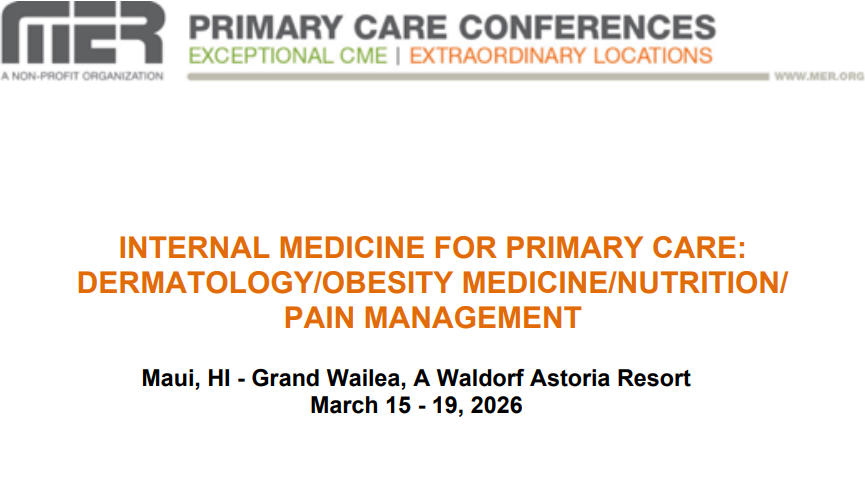
The “Internal Medicine for Primary Care: Dermatology/Obesity Medicine/Nutrition/Pain Management” is a conference organized by Medical Education Resources (MER), a non-profit organization. The event is scheduled to take place from March 15-19, 2026, at the Grand Wailea, A Waldorf Astoria Resort in Maui, Hawaii.
2. Learning Objectives
Upon completion of this program, participants should be better able to:
-
Differentiate between the presentations and causes of atopic, contact (irritant and allergic), and nummular dermatitis.
-
Differentiate benign and malignant skin tumors and employ appropriate interoffice procedures.
-
Detect pre-cancerous and cancerous skin lesions.
-
Discriminate between various viral skin infections and treatment strategies.
-
Compare the different treatment options for fungal skin infections and nail infections.
-
Discuss how popular diets and nutritional science can lead to healthier lifestyles.
-
Identify expectations for optimal nutrition across the patient’s expected life span.
-
List strategies to modify diet and behaviors in patients with a range of health issues.
-
Describe options for personalizing a patient-specific nutrition plan to each patient.
-
Discuss factors in adequate nutrition that enhance athletic performance.
-
Identify strategies to overcome the challenges of treating chronic pain.
-
Compare the benefits and side effect profiles of pharmacologic treatment options for fibromyalgia.
-
Design opioid pain management strategies.
-
Describe how non-surgical activity modification and physical therapy can benefit low back pain patients.
-
Explain the underlying mechanisms and physiological processes that contribute to the development and progression of obesity, including the roles of genetics, hormones, metabolism, and environmental factors.
-
Discuss non-surgical obesity treatment options.
-
List the advantages and disadvantages of surgical options and the post-surgery care of patients.
-
Describe the approach to patient management after bariatric surgery.
-
Describe the pathophysiology surrounding obesity and council patients on the various weight management strategies, including patient selection criteria for surgery.
3. Target Audience
This program is targeted to office-based primary care providers and other health professionals with updates in primary care medicine.
4. Topics
Dermatology
-
Dermatitis: Overview of the causes and forms of skin irritants; Contact, atopic, irritant, nummular, seborrheic and exfoliative; Treatment of blistering, oozing, crusting and flaking; Diagnostic principles and management strategies.
-
Benign Skin Tumors: Proper diagnosis and treatment of common benign tumors; Biopsies and histopathologic examination; Nevi, seborrheic keratosis keloids, hemangiomas and miscellaneous tumors; When to refer.
-
Premalignant and Malignant Skin Tumors: Recognition of precursors of malignancies; Excisional and punch biopsies; Actinic keratosis, Bowen’s disease, squamous cell carcinoma, basal cell carcinoma, melanoma and other selected tumors; Risk reduction education.
-
Viral Infections of the Skin: Proper diagnosis and differences in viral skin presentation; Herpes simplex, varicella-zoster, viral exanthems; Molluscum and warts; Treating lasting post-herpetic neuralgia; Symptom management and referral to dermatology.
-
Fungal Infections of the Skin: Dermatophytes, tinea versicolor, candidiasis; Selected deep fungal infections; Onycholysis; Drug induced nail changes; paronychia, koilonychia, nail discolorations, tumors of the nail; Fungal infections diagnosis and management; Overview and comparison of antifungal treatment options.
Nutrition
-
Myths vs. Science in Nutritional Trends: Approach for the Medical Professional: Discussion of how to scientifically navigate the nutritional maze of popular diets and nutritional trends; The potential nutrition benefits and pitfalls of various dietary preferences and related patient concerns; Ways nutrition affects healthy lifestyles.
-
Nutrition Through the Ages: Prevention and Potential Pitfalls: A working guide for a nutritional and behavioral rubric to understand what is expected (and what may undermine) optimal health from infancy through the elderly; Barriers patients face in implementing and sticking with nutritional strategies.
-
Medical Nutrition Therapy: A Practical Approach to Diet and Disease: Science-based Nutrition and Behavioral Guide to Treating “The Big” Medical Problems that are taking over your practice; Essential (and proven) strategies to help guide patients’ diet and behaviors in the treatment of diabetes, cardiovascular disease, and GI health; Travel through the google-mess of what patients hear and why they turn to these as resources; The science-based strategies and resources that can be implemented to help patients take rational control of their health.
-
Cutting Edge Nutrition Innovation: A Personalized Approach: How to critically evaluate nutrition tools that patients can use to promote optimal health; Review the “latest and greatest” nutrition applications and technologies that can be used to greatly improve patients’ nutrition and health pursuits; Creation of personalized health plans based on unique, patient-specific plans, tests, and analyses.
-
Performance Nutrition: Bridging the Spectrum: Sports nutrition is an evolving field and aims to improve nutrition guidelines for both active adults and competitive athletes; Concepts for how adequate nutrition enhances athletic performance; Discussion of disordered eating and eating disorders; Overview of dietary guidelines and guidance.
Pain Management
-
Chronic Pain Review/Behavioral Interventions for Chronic Pain Syndromes: Chronic pain is much more complex than just acute pain that lasts a long time; The physiological and clinical categorization of chronic pain will be explored; The importance of the final physiologic component of pain–perception–is receiving a lot of attention in the medical literature; Behavioral interventions designed to target this process such as cognitive behavioral therapy and mindfulness approaches will be reviewed.
-
Peripheral Neuropathy and Fibromyalgia: Neuropathic pain arises from damage to neural tissue; Fibromyalgia is a classic example of the nociplastic pain category; A variety of treatment modalities will be discussed for both conditions.
-
Knee Osteoarthritis/Cannabinoids for Chronic Pain: Osteoarthritis has both nociplastic and neuropathic components; Successful treatment planning includes considerations for both; The second half of the presentation will review the medical utility of cannabinoids as analgesic agents.
-
Back Pain: Back pain is a common cause of long term disability; Non-pharmacologic and pharmacologic interventions will be discussed for a variety of causes of back pain including failed back surgery syndrome.
-
Safe Opioid Prescribing: The role of opioids in the management of chronic pain will be addressed in the contexts of the updated CDC guidelines and the increasing prevalence of opioid use disorder.
Obesity Medicine
-
Pathophysiology of Obesity: A guide to understanding practice demographics and considerations; The what and why of epigenetics; A practical guide to behavioral and medication management.
-
Medical Management of Obesity: Overview of obesity as a disease state; Costs to the individual of being obese; Use of appetite suppressant medications and lifestyle modifications.
-
Complications and Considerations of Bariatric Surgery: An overview of risks and effectiveness of bariatric surgery; Overview of potential surgical options; Potential complications; The role of support and behavior modification, nutrition, and the stages of patient management post-surgery.
-
Patient Management Post-bariatric Surgery: The role of the clinician for support and behavior modification, nutrition, and the stages of patient management post-surgery.
-
Guiding Patients in the Medical and Surgical Care of Obesity: Differences in treating obesity vs. other medical conditions, treatments, and procedures; Strategies for better engagement and understanding of patient pathways, perspectives, and team partnership.


Reviews
There are no reviews yet.