Description
+ Include: videos + file sub vtt + pdf, size: GB
+ Target Audience: Primary Care Physicians, Dermatologists, Endocrinologists, Gynecologists, Vascular Medicine Specialists
+ Sample video: contact me for sample video
+ Information:
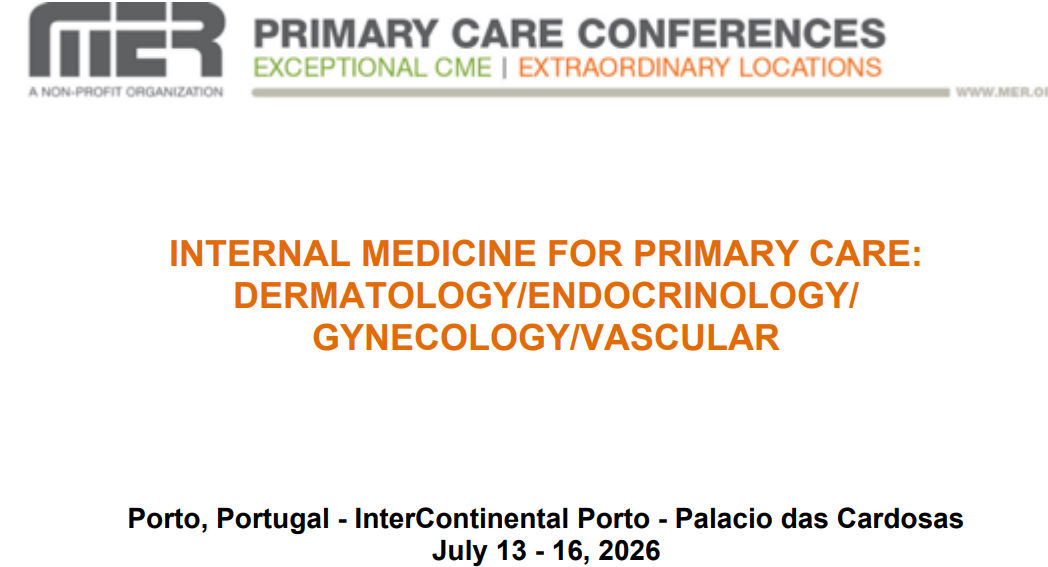
The “Internal Medicine for Primary Care: Dermatology/Endocrinology/Gynecology/Vascular” conference is a continuing medical education event organized by Medical Education Resources (MER), a non-profit organization. The conference is scheduled to take place from July 13-16, 2026, at the InterContinental Porto – Palacio das Cardosas in Porto, Portugal.
Learning Objectives
Upon completion of this program, participants should be better able to:
-
Differentiate between the presentations and causes of atopic, contact (irritant and allergic), and nummular dermatitis.
-
Discriminate the diagnostic principles and treatment options for papulosquamous diseases with red, raised bumps.
-
Identify cutaneous findings that serve as surrogates of internal diseases.
-
Detect pre-cancerous and cancerous skin lesions.
-
Assess and manage abnormal uterine bleeding.
-
Describe the management of abnormal pap smears and HPV.
-
Discuss menopausal transition and the risks/benefits of treatment options.
-
Discuss the current evidence and recommendations regarding breast cancer screening.
-
Identify the risks of abnormal thyroid function.
-
Describe the diagnostic evaluation of thyroid nodules with a focus on the utilization of ultrasound and cytology.
-
Identify the risks and benefits of utilizing bisphosphonates in the treatment of osteoporosis.
-
Describe treatment options for pituitary disorders.
-
Describe the spectrum of maladies included in peripheral vascular disease.
-
Discuss presentation and interventional treatment of stroke patients.
-
List current pharmacologic options for the management of aneurysms.
-
Describe the evaluation and treatment of venous thrombosis.
Target Audience
- This program is targeted to office-based primary care providers and other health professionals with updates in primary care medicine.
- Best for Primary Care Physicians, Dermatologists, Endocrinologists, Gynecologists, and Vascular Medicine Specialists.
Topics
-
Dermatitis: Overview of the causes and forms of skin irritants; Contact, atopic, irritant, nummular, seborrheic and exfoliative; Treatment of blistering, oozing, crusting and flaking; Dagnostic principles and management strategies.
-
Papulosquamous Diseases: Diagnositic principles of skin lesions consisting of red or purple papules; Psoriasis, lichen planus, pityriasis rosea, lupus erythematosus; Discussion of how to tell one scaly rash from another.
-
Skin Manifestations of Systemic Disease: Skin will often reflect signs of systemic diseases, be useful for diagnosis, or suffer from a complication of disease or its treatment; Diagnosis of rheumatalogic, endocrine, gastrointestinal, and psychologic conditions based on cutaneous findings.
-
Abnormal Uterine Bleeding: Overview of normal/abnormal menstrual physiology/profile; Menstrual disturbances; Ovulatory and anovulatory uterine bleeding; Other menstrual abnormalities; Diagnosis and appropriate treatment options.
-
Abnormal Pap Smears and High Risk HPV: Current recommendations for cervical cancer screening; Incorporating the ASCCP consensus guidelines for management of cytologic cervical abnormalities (including ASCUS, LGSIL, HGSIL and atypical glandular cells) into your practice; Algorithm for the appropriate use of HPV testing; History of HPV and effectiveness of its use; Recommendations for missed doses; Storage and administration of HPV vaccines.
-
Menopause Transition and Hormone Replacement Therapy: Symptoms of menopause, including hot flashes, night sweats, and atrophy; Menopause syndromes, including osteoporosis, breast cancer, cardiac disease, and colon cancer; Estrogen analogs; Counseling patients in options and alternatives to hormone therapy; Designer estrogens; SERMS; HRTs; Discussion of risks and benefits, especially in breast cancer and CHD.
-
Breast Cancer Screening: Comparison of recent breast cancer screening recommendations from U.S. Preventive Services Task Force, ACOG/ACS/NCCN, including a discussion of risks and benefits of screening at various ages; Review of the new USPSTF guideline on BRCA-related cancer: risk assessment, genetic counseling, and genetic testing, including risk assessment tools for women with a personal or family history of breast, ovarian and related cancers.
-
Premalignant and Malignant Skin Tumors: Recognition of precursors of malignancies; Excisional and punch biopsies; Actinic keratosis, Bowen’s disease, squamous cell carcinoma, basal cell carcinoma, melanoma and other selected tumors; Risk reduction education.
-
Disorders of Thyroid Function: Prevalence, diagnosis and treatment options of hypothyroidism and hyperthyroidism.
-
Thyroid Nodules and Cancer: Diagnosis and treatment.
-
Osteoporosis: Review the epidemiology and pathophysiology of osteoporosis along with interpretation of DEXA scans and FRAX risk assessment; up-to-date therapeutic options.
-
Evaluation and Management of Pituitary Disease: Diagnosis and treatment of pituitary disorders.
-
Peripheral Vascular Disease and Medical Therapy: Defining the spectrum of maladies under the umbrella of Peripheral Vascular Disease including the pathophysiology of atherosclerosis and treatments highlighting lipid lowering agents and antiplatelet therapy.
-
Stroke: Initial Presentation to Medical and Surgical Treatment: An overview of embolic stroke including diagnosis and medical, surgical, and interventional therapy.
-
Aortic and Peripheral Aneurysms: A guide for primary care outlining diagnosis, management, and therapeutic options.
-
Management of Venous Thrombosis: A discussion focusing on the variety of venous thrombotic diagnoses and the multiple available treatment options.



Reviews
There are no reviews yet.