Description
+ Include: videos + file sub vtt, size: GB
+ Target Audience: Primary Care Physicians, Infectious Disease Specialists, Pulmonologists, and Podiatrists
+ Sample video: contact me for sample video
+ Information:
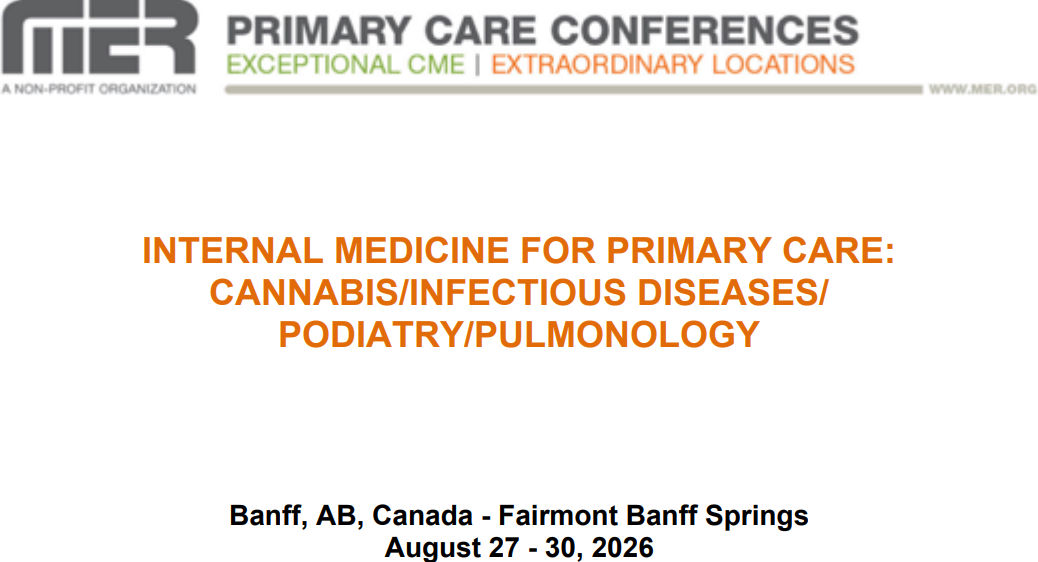
The Internal Medicine for Primary Care: Cannabis/Infectious Diseases/Podiatry/Pulmonology conference is organized by Medical Education Resources (MER) and will take place from August 27 to August 30, 2026, at the Fairmont Banff Springs in Banff, Alberta, Canada. This program provides primary care clinicians and the healthcare team with evidence-based updates across four diverse specialties to improve diagnosis, treatment, and overall patient management.
Learning Objectives
-
Review epidemiology and microbiology of skin and soft tissue infections (SSTI).
-
Evaluate the severity of diarrhea and evaluate the need for treatment.
-
Diagnose and manage genitourinary infections.
-
List goals of an antimicrobial stewardship program and strategies for antimicrobial treatment.
-
Describe the effects the endocannabinoid and opioid systems have on the body.
-
List was cannabis impacts a patient’s brain activity.
-
Demonstrate an understanding of the cardiac impacts by cannabinoids.
-
Discuss the impacts of cannabis on the adolescent, in utero and the elderly.
-
Diagnose and manage patients with asthma.
-
Design treatment strategies reflective of current evidence-based medicine for common respiratory infections.
-
Describe the current therapeutic management of COPD.
-
Discuss diagnosis and screening strategies as well as treatment plans for lung nodules and lung cancer.
-
Recognize and diagnose common foot and ankle pathologies as they present in the primary care setting.
-
Diagnose and manage ankle injuries and identify when referral is appropriate.
-
Discuss technologies used to treat acute and chronic plantar fasciitis.
-
Recognize achilles tendinitis and recommend appropriate treatment.
Target Audience
This program is targeted to office-based primary care providers and other health professionals with updates in primary care medicine.
Best for Primary Care Physicians, Infectious Disease Specialists, Pulmonologists, and Podiatrists.
Topics
-
Skin & Soft Tissue Infections: Presentation on important skin and soft-tissue infections and their prompt recognition, emphasizing evaluation and management strategies.
-
Gastrointestinal Infections & Clostridiodes Difficile: Presentation on important enteric pathogens and their recognition, diagnosis and management; special emphasis on clostridiodes difficile colitis and related updates from the ID and infection control literature.
-
Genitourinary Infections: Presentation on a relevant and clinically practical approach to the patient with genitourinary complaints focusing on the latest guidelines for the range of urinary tract infections and highlights of selected and important sexually-transmitted disease syndromes.
-
The Science Behind the Endocannabinoid System: Discussion of the endocannabinoid system and how it interacts in various organ systems; Discussion of how the endocannabinoid and opioid systems interact; Discussion will demonstrate the various drug interactions exogenous cannabinoids may have on the human body.
-
The Brain on Cannabis: Addiction, Depression, Psychosis, and More: The brain as the target organ in the use of cannabis; Description of the impacts on the brain, including anxiety, depression, suicidality, and psychosis; The biological mechanisms of these impacts will be outlined.
-
The Heart on Cannabis: Short and Long-Term Risks: The heart as the second most important targeted organ by the endocannabinoid system; Demonstration of the mechanisms and highlights of the importance of screening for cannabis use, particularly in younger people; Examples of the cardiac impacts.
-
Exposure to Cannabis In Vulnerable Populations: Discussion of the impact of cannabis use on vulnerable populations; Inclusion of in utero effects and the effects on young children as well as the elderly; tips for providers in conversations with patients, parents, and family members.
-
Antimicrobial Stewardship and Multidrug Resistance: Definition of an antimicrobial stewardship program (ASP); Concepts of the antimicrobial stewardship program; Four goals of antimicrobial stewardship; Most recent additions to the antimicrobial armamentarium.
-
Asthma: The medical impact of asthma; fundamental role of inflammation, with possible scarring and irreversible loss of lung function; practical points of diagnosis; goal setting management based on levels of severity; risk factors for mortality and treatment in the acute setting; management options for the difficult to control asthmatic patient.
-
Controversies in the Treatment of Common Respiratory Infections: Acute and chronic bronchitis; pneumonia (community versus hospital-acquired); role of the Pneumonia Severity Index score in determining indication for hospitalization; cost- effective use of antibiotics; clinical significance of drug resistance; guidelines for management.
-
COPD: Definition; pathophysiology; early detection and intervention; risk reduction; management update including new modalities (including lung volume reduction surgery) and the role of inhaled corticosteroids and domiciliary oxygen.
-
Lung Cancer Screening & Pulmonary Nodules: Appropriate use of the new lung cancer screening recommendations; Fleischner Society guidelines and American College of Chest Physician Lung Cancer guidelines; approach to definitive evaluation and management strategies.
-
Common Foot and Ankle Pathologies Seen in Primary Care: Gain a familiarity and confidence to recognize common foot and ankle pathologies in the clinical setting and gain better knowledge of treatment options; Differential diagnoses and understanding of when to send patients to a specialist; Common pathologies include: Morton’s neuromas, bunions, flatfoot deformities, capsulitis, hammertoes, etc.; Determining which patients need further diagnostic imaging and surgical intervention.
-
Ankle Sprains: Session will explore those injuries which present to the primary care office that can easily be managed, those that require additional diagnostics, and the tricky injuries that may need referral.
-
Plantar Fasciitis: Session will discuss the causes and prevention of this common problem and discuss new and exciting technologies used to treat the acute and chronic forms of this condition.
-
Achilles Tendinitis: The Achilles tendon is the largest and strongest tendon in the body, yet it is highly susceptible to injury. Achilles tendon injuries account for the third most common injury to the lower extremity after the ankle sprain and plantar fasciitis. This lecture will explore the causes of Achilles tendon conditions and their treatment. A differentiation between insertional and non-insertional tendonitis is critical for proper treatment. A multitude of new modalities which are available for the primary care provider to effectively treat and prevent Achilles tendon injuries will be discussed.


Reviews
There are no reviews yet.