Description
+ Include: videos + file sub vtt, size: GB
+ Target Audience: Primary Care Physicians, Family Medicine Physicians, Internal Medicine Physicians, and Infectious Disease Specialists
+ Sample video: contact me for sample video
+ Information:
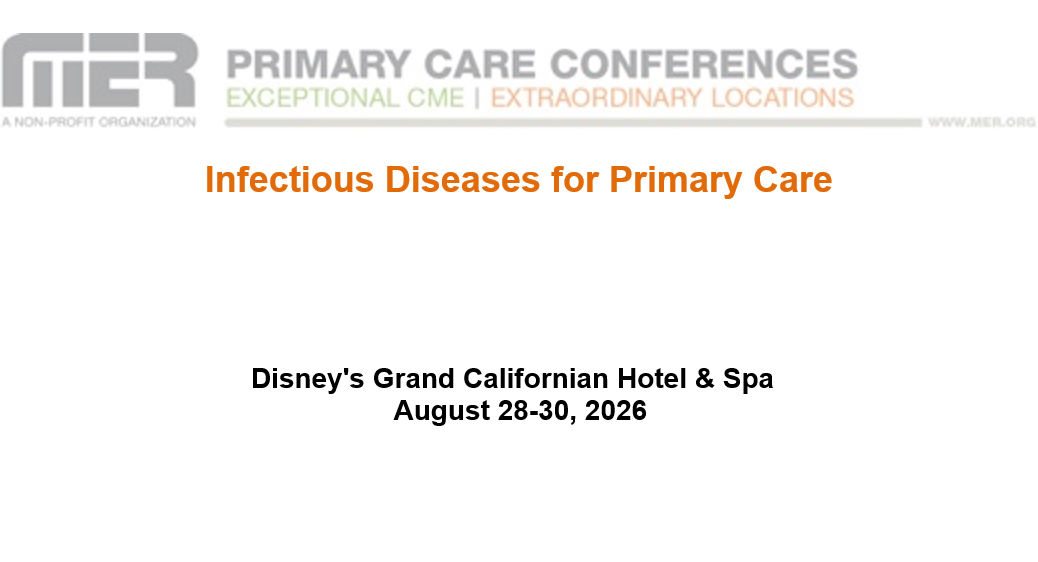
The Infectious Diseases for Primary Care conference by Medical Education Resources (MER), scheduled for August 28–30, 2026, is designed to provide primary care practitioners with up-to-date, evidence-based information on the diagnosis, treatment, and management of commonly encountered infectious diseases. The program emphasizes pragmatic approaches to antimicrobial stewardship, emerging infections, and clinical decision-making in the ambulatory setting to improve patient outcomes.
Learning Objectives
-
Discuss the clinical presentation, diagnosis, and management of common respiratory tract infections.
-
Determine appropriate treatment strategies for urinary tract infections while adhering to antimicrobial stewardship principles.
-
Evaluate and manage skin and soft tissue infections, including community-acquired MRSA.
-
Apply current ACIP adult immunization guidelines effectively in primary care practice.
-
Identify and treat common sexually transmitted infections based on the latest CDC guidelines.
-
Recognize the clinical features of tick-borne diseases and implement appropriate prophylactic and therapeutic protocols.
-
Manage emerging and seasonal viral infections, including COVID-19, influenza, and RSV.
-
Evaluate gastrointestinal infections, focusing on the management and prevention of Clostridioides difficile.
Target Audience
This program is targeted to office-based primary care providers and other health professionals with updates in primary care medicine.
Best for Primary Care Physicians, Family Medicine Physicians, Internal Medicine Physicians, and Infectious Disease Specialists.
Topics
-
Respiratory Tract Infections: Diagnosis and management of community-acquired pneumonia (CAP), acute bronchitis, rhinosinusitis, and pharyngitis; distinguishing viral from bacterial etiologies; guideline-based antibiotic selection.
-
Urinary Tract Infections: Uncomplicated and complicated UTIs; management of asymptomatic bacteriuria; strategies for recurrent UTIs in women; catheter-associated UTIs; navigating local resistance patterns.
-
Skin and Soft Tissue Infections: Impetigo, cellulitis, erysipelas, and abscesses; outpatient management of community-acquired MRSA; mammalian bite wounds; identifying indications for inpatient admission versus outpatient therapy.
-
Adult Immunizations: Comprehensive review of current ACIP guidelines; updates on pneumococcal, herpes zoster, RSV, COVID-19, and influenza vaccines; practical strategies for overcoming vaccine hesitancy.
-
Sexually Transmitted Infections (STIs): Diagnosis and treatment of syphilis, gonorrhea, chlamydia, and trichomoniasis; updates from the latest CDC STI Treatment Guidelines; utilizing expedited partner therapy.
-
Tick-Borne Diseases: Clinical presentation of Lyme disease, anaplasmosis, babesiosis, and Rocky Mountain spotted fever; understanding geographic distribution; implementing prophylaxis after tick bites and defining treatment protocols.
-
Viral Respiratory Pathogens: Outpatient management and therapeutics for COVID-19, seasonal influenza, and respiratory syncytial virus (RSV); the role and interpretation of rapid point-of-care diagnostics.
-
Gastrointestinal Infections: Clinical evaluation of acute infectious diarrhea; evidence-based management and secondary prevention of Clostridioides difficile (C. diff) infection; addressing common foodborne illnesses.
-
HIV Prevention and Care in Primary Care: Implementation of Pre-exposure prophylaxis (PrEP); protocols for routine HIV screening; the initial clinical evaluation and counseling of the newly diagnosed HIV patient.
-
Viral Hepatitis: Screening protocols, interpretation of serology, and initial management of Hepatitis B and Hepatitis C; evaluating abnormal liver enzymes in the context of infectious etiologies.


Reviews
There are no reviews yet.