Description
+ Include: videos + file sub vtt, size: GB
+ Target Audience: primary care physicians, opthalmologists, rheumatologists, geriatrics physicians
+ Sample video: contact me for sample video
+ Information:
1. Overview
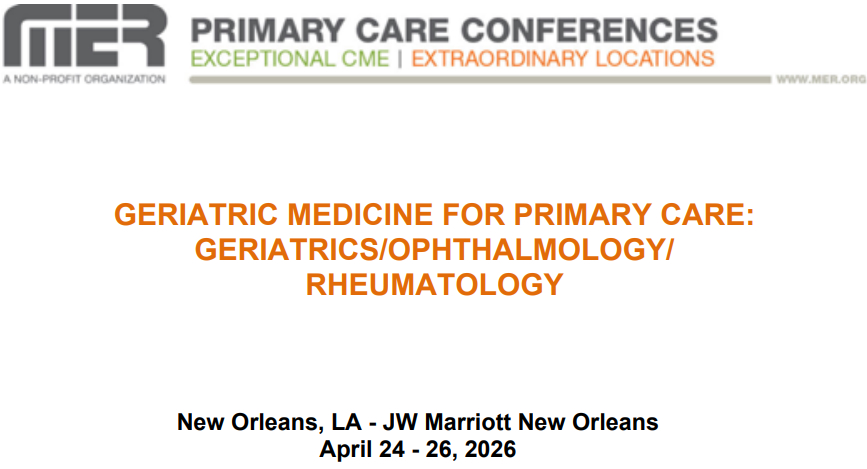
The “Geriatric Medicine for Primary Care: Geriatrics/Ophthalmology/Rheumatology” is a program organized by Medical Education Resources (MER), a non-profit organization. The event is scheduled to take place from April 24-26, 2026, at the JW Marriott New Orleans in New Orleans, LA.
2. Learning Objectives
Upon completion of this program, participants should be better able to:
-
Evaluate and manage common musculoskeletal problems and pain in the elderly.
-
Describe risks and benefits of traditional pharmacologic agents for treating arthritis.
-
Describe assessment and management of pain in the older adult.
-
Assess and manage gait disorders to prevent falls.
-
Utilize current evidence to design treatment strategies for osteoarthritis.
-
Describe the differential diagnoses of inflammatory arthritis based on clinical presentation and laboratory workup.
-
Identify the risks and benefits of utilizing bisphosphonates in the treatment of osteoporosis.
-
Diagnose and treat gout and pseudogout.
-
Discuss a comprehensive approach to eye and vision management in the aging patient.
-
Discuss a comprehensive approach to the patient with dry eyes and a red eye seen in primary care.
-
Identify common causes of blurred vision.
-
Describe ways that eye examination can impact diagnosis, treatment and clinical decision making.
3. Target Audience
This program is targeted to office-based primary care providers and other health professionals with updates in primary care medicine.
4. Topics
Geriatrics
-
Common Musculoskeletal Problems in the Elderly: Discuss strategies to minimize musculoskeletal problems in the elderly patient population.
-
Update in Pharmacology for Arthritis in the Older Adult: Review risks and benefits of traditional NSAIDs and cox-2 inhibitors; analgesics (narcotics and tramadol) and acetaminophen.
-
Pain Management in the Older Adult: Assessment and management of pain in the older adult.
-
Geriatric Gait Disorders & Falls: Diagnosing problems associated with gait abnormalities; considering causes and prevention of falls; exercise training, aerobics, balance training, resistance.
Rheumatology
-
Osteoarthritis: Pathogenesis, diagnosis and treatment.
-
Differential Diagnosis of Inflammatory Arthritis: Clinical presentation and laboratory work-up and treatment for rheumatoid arthritis, systemic lupus erythematosus, spondyloarthropathies (SPA), infectious arthritis and systemic sclerosis; Treatment of RA with DMARDs; Treatment principles of SLE, Sjogren’s, SPA and PMR.
-
Osteoporosis: Review the epidemiology and pathophysiology of osteoporosis along with interpretation of DEXA scans and FRAX risk assessment; up-to-date therapeutic options.
-
Crystal Disease: Gout & Pseudogout: Properly diagnosing and treating crystal diseases such as gout and pseudogout.
Ophthalmology
-
Approach to the Aging Eye: Differentiation between “normal” aging process and the “diseases” of ocular aging; Highlighting of the most common issues facing the aging population with respect to ophthalmology: macular degeneration, diabetes and glaucoma.
-
Dry Eye: The role of age, hormone levels and environmental factors in producing dry eyes; Differentiating and understanding triggers of dry eye disease; The ocular role in photophobia and migraine; Overview of treatment options.
-
Blurred Vision: Blurred vision is a common problem seen in primary care and the emergency room. Lecture will develop an algorithm to evaluate, triage and treat these patients. When should someone with a complaint of blurred vision be sent to an ophthalmologist? When should an imaging study be done? What could be causing this problem in the first place? Lecture will address these questions and others.
-
Ophthalmic Manifestations of Systemic Diseases: In this talk we will explore the variety of ways that examination of the eye can impact the diagnosis, treatment and clinical decision making for patients seen on a daily basis in primary care offices. We will discuss vascular, hematologic, respiratory and autoimmune conditions with attention to the ways in which a patients’ care can be positively influenced by taking into account the information available from visual system analysis and monitoring.


Reviews
There are no reviews yet.