Description
+ Include: 43 videos + 43 file sub vtt + 37 pdfs, size: 5.77 GB
+ Target Audience: oncology advanced practice providers, nurses, and physicians
+ Sample video: contact me for sample video
+ Information:
1. Overview
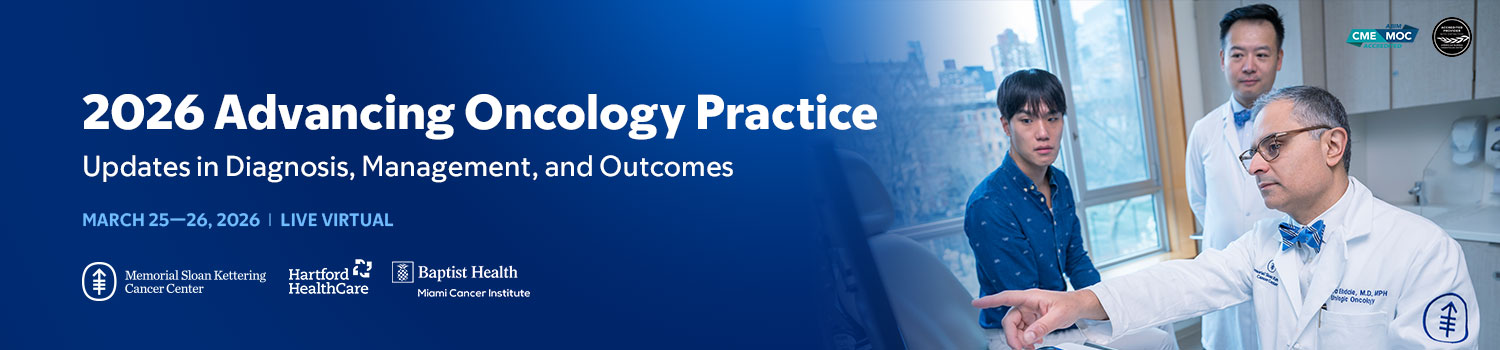
The Memorial Sloan Kettering Cancer Center Advancing Oncology Practice 2026 program provides a comprehensive review of the latest innovations and clinical practices in oncology. The course covers diverse topics including artificial intelligence in decision-making, advanced surgical approaches, immunotherapy, Adolescent and Young Adult (AYA) oncology, and the expanding role of Advanced Practice Providers (APPs) in clinical research and patient care.
Course Date: Wednesday, March 25, 2026, 8:00 AM – Thursday, March 26, 2026, 2:30 PM, Online
This two-day live virtual symposium is designed to provide a comprehensive update on advances in cancer treatment and management across the oncology care continuum. The program will highlight current evidence-based clinical practice and research initiatives; address health inequities and wellness in the oncology population; explore the evolving role of technology and social media in healthcare; and examine emerging trends in independent oncology practice and professional development. The overarching goal of this activity is to equip healthcare professionals with practical tools to deliver state-of-the-art, collaborative, team-based cancer care — ultimately improving patient outcomes and enhancing quality of life for individuals living with cancer.
2. Learning Objectives
- Identify innovative medical and surgical cancer treatment strategies for adult and pediatric cancers.
- Discuss ethical considerations seen throughout the cancer care continuum.
- Describe the multi-disciplinary approach and specialized teams necessary to optimize care in the oncology population.
- Formulate an optimal plan for the management of patients experiencing an oncologic emergency.
- Recognize inequities in the screening, diagnosis, and management of cancer.
- Identify cancer risk, assessment, prevention, and treatment in patients with a hereditary predisposition.
- Explain initiatives that promote advanced practice provider practice and professional development.
- Describe the current and future implications of artificial intelligence, social media, and advances in technology in the cancer care landscape.
3. Target Audience
Best for oncology advanced practice providers, nurses, and physicians who want updates on AI integration, immunotherapy, and holistic care.
4. Topics
-
Augmenting the Clinician- Artificial Intelligence in Oncology Decision Making
-
Best Practices in Prognosis and Goals-of-Care Conversations
-
Breast Cancer in the AYA Patient- Biology, Fertility, and Beyond
-
Bridging the Gap- Expanding Access to Comprehensive AYA Oncology Care
-
Caring for Jehovah’s Witness Patients with Malignant Hematologic Diseases
-
Emergencology- Managing the “Can’t Miss” Diagnoses in the Outpatient Oncology Setting
-
Endometrial Cancer and a Surgical Approach
-
Ethical Dilemmas at the End of Life
-
From Bedside to Bench- Expanding the APP Role in Clinical Research and Innovation
-
From Orientation to Autonomy- The Journey to Independent Practice
-
From Preservation to Parenthood- Uterine Transposition in Oncofertility Care
-
Gender-Affirming Oncology- Best Practices for Transgender Patient Care
-
Healthcare Transformation Through Academic and Community-Hospitality Partnerships
-
Immunotherapy Toxicities (GI-Liver) — Predict, Prevent, Protect
-
Inherited Risk, Informed Care- Genetics in AYA Oncology
-
Innovations in Breast Reconstruction for Managing the Ptotic Breast
-
Life After Cancer- Advanced Strategies for Long-Term Survivor Care
-
Likes, Lies & Longevity- Healthcare Education in the Era of Misinformation
-
Oncology on the Air- Using Podcasts to Educate, Engage, and Empower
-
Oncology Symptom Care Without Borders- Expanding Access Beyond the Main Campus
-
Oncology’s Moral Crossroads- Navigating Ethical Conundrums in Cancer Care
-
One Room, Many Voices- Leveraging Shared Medical Visits in Oncology Care
-
Optimizing Management of Chemotherapy-Induced Thrombocytopenia in Solid Tumors- The Role of TPO-Receptor Agonists
-
Patient Perspective – The Rarest Journeys- A Patient’s Perspective on the Diagnosis and Treatment of Rare Tumors in AYA Oncology
-
Primary Palliative Care in the Community Setting
-
Q&A and Panel Discussion – 01
-
Q&A and Panel Discussion – 02
-
Q&A and Panel Discussion – 03
-
Q&A and Panel Discussion – 04
-
Q&A and Panel Discussion – 05
-
Q&A and Panel Discussion – 06
-
Racial Disparities in the Use of Psychedelics
-
RAS Therapies in Pancreas Cancer- The New Age
-
Ready for the Table- The APPs Impact on Preoperative Optimization and Surgical Readiness
-
Recent Advancements in the Management of Gastro-Intestinal Malignancies
-
Robotic Surgery Training Redefined- APP-Led Wet Labs in Surgical Oncology Fellowships
-
Safety and Efficacy Data from Nexicart-2, the First U.S. Trial of CAR-T in R-R Light Chain (AL) Amyloidosis, Nxc-201
-
The Emerging Role of Immunotherapy in dMMR Colorectal Cancer
-
The Smart OR- Artificial Intelligence in Surgical Oncology
-
Transplant-Associated Thrombotic Microangiopathy (TA-TMA)
-
Triage and Transfer in the SCC
-
Voices that Change Policy- APP Political Advocacy in Action – The Future of APP Practice in a Changing Legislative Landscape


Reviews
There are no reviews yet.