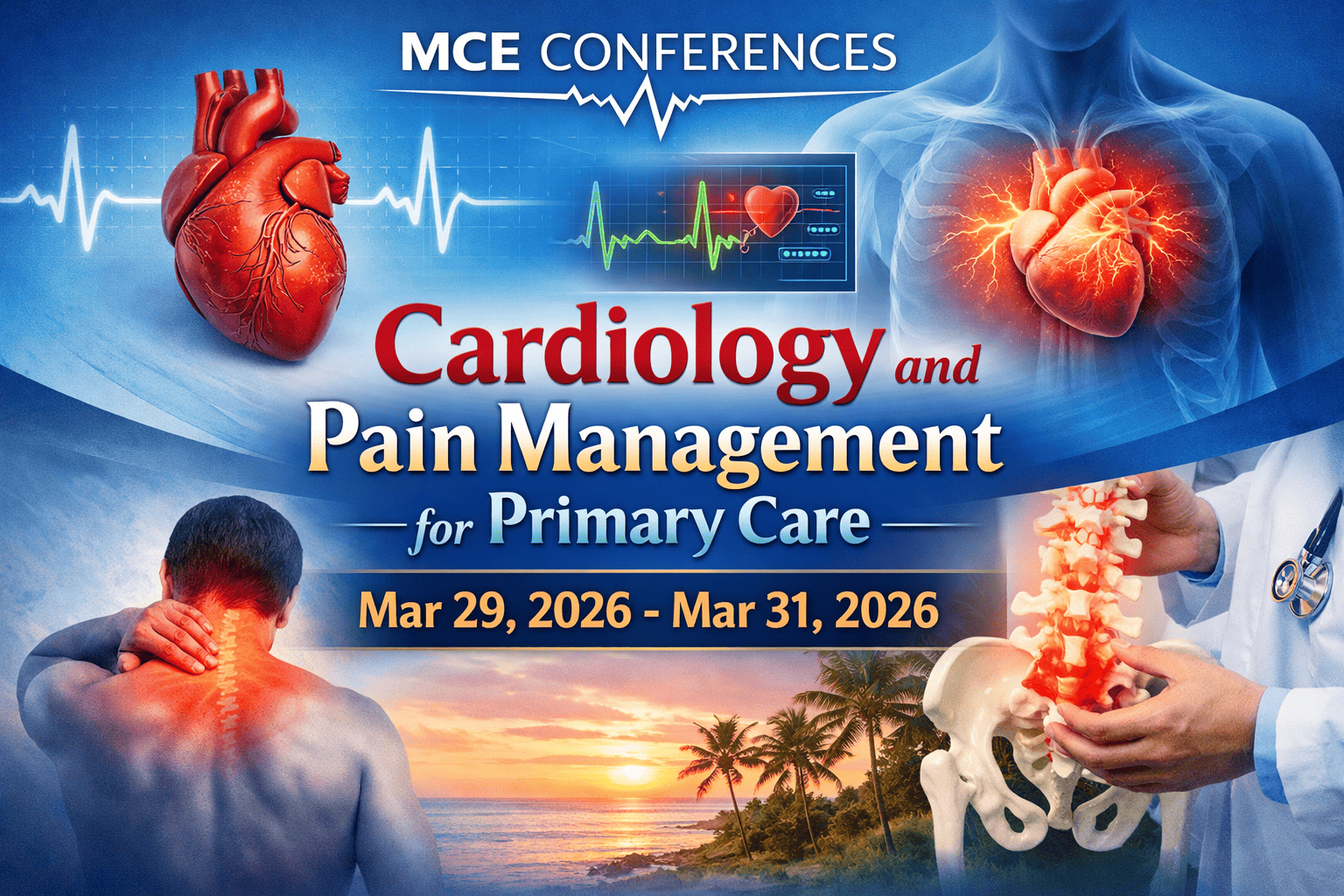
Description
+ Include: videos + file sub vtt + pdfs, size: GB
+ Target Audience: All Physicians and other Healthcare Professionals seeking clinical information about issues in Cardiology and Pain Management
+ Sample video: contact me for sample video
+ Information:
Overview
This conference is designed to provide primary care practitioners with up-to-date, evidence-based information on commonly encountered issues in Cardiology and Pain Management while suggesting pragmatic approaches to clinical management. The discussion-based format of the conference will encourage audience participation through dynamic lectures, case-based studies, and hands-on workshops. Keynote speakers will present and critically assess recent advancements and industry updates in Cardiology and Pain Management, to enhance the knowledge base and core competence of attendees. The successful completion of this interactive program will help you in diagnosing, treating, and prescribing the most effective courses of treatment, with the ultimate goal of improving patient outcomes.
Target Audience
- All Physicians and other Healthcare Professionals seeking clinical information about issues in Cardiology and Pain Management.
Schedule
- Sunday, March 29th
- 7:30 AM – 8:30 AM: Non-Opioid Pharmacologic Management of Chronic Pain
- Objectives: 1) Discuss the neurobiology of chronic pain and how this relates to pharmacologic targets 2) Develop a data-driven and practical understanding of dosing, benefits, and side-effects of common non-opioid pharmacologic agents 3) Implement pharmacologic algorithms for treating common pain syndromes, such as acute back pain, fibromyalgia, and neuropathic pain
- 8:35 AM – 9:35 AM: Opioids for Chronic and Cancer Pain: Rationale Prescribing
- Objectives: 1) Highlight the practical aspects of chronic opioid therapy, including opioid selection, rotation, and side-effect management 2) Appreciate the nuances in titration for different pain syndromes 3) Review clinical pearls and strategies for managing chronic opioid therapy, as safely as possible 4) Discuss the use of opioids for cancer pain and how the approach differs from chronic non-cancer pain
- 9:45 AM – 10:45 AM: Heart Failure
- Objectives: 1) Recognize and manage heart failure exacerbations, including assessment of volume status and optimization of guideline-directed medical therapy 2) Develop a deeper understanding of heart failure mechanisms to guide outpatient treatment decisions 3) Formulate individualized treatment plans to improve symptoms, reduce hospitalizations, and optimize long-term outcomes
- 10:50 AM – 11:50 AM: Coronary Artery Disease
- Objectives: 1) Identify patients with known or suspected coronary artery disease in the primary care setting 2) Apply evidence-based strategies to reduce mortality and slow disease progression 3) Select appropriate pharmacologic therapies for coronary artery disease 4) Develop individualized treatment plans based on patient risk factors and comorbidities
- Monday, March 30th
- 7:30 AM – 8:30 AM: Hypertension
- Objectives: 1) Accurately diagnose hypertension using proper measurement techniques and out-of-office readings 2) Identify common primary and secondary causes of hypertension 3) Assess cardiovascular risk and complications associated with hypertension 4) Apply individualized lifestyle and pharmacologic treatment strategies to achieve blood pressure targets and reduce cardiovascular risk
- 8:35 AM – 9:35 AM: Assessment of Patients Presenting with Chest Pain
- Objectives: 1) Perform a focused history and physical exam for patients presenting with chest pain 2) Select and interpret appropriate diagnostic testing for chest pain 3) Identify life-threatening causes of chest pain requiring urgent evaluation 4) Differentiate benign from serious etiologies to guide timely management and referral
- 9:45 AM – 10:45 AM: Managing Pain in Geriatric Patients
- Objectives: 1) Recognize the nuances in assessing pain in the elderly 2) Review the pharmacologic challenges in managing elderly patients 3) Identify the balance between pain control and iatrogenesis in the elderly population
- 10:50 AM – 11:50 AM: Interventional Procedures for Spine Pain
- Objectives: 1) Recognize the rationale and technical considerations of common minimally invasive interventions for spine-related pain, such as epidural steroid injections, radiofrequency lesioning, facet injections, sacroiliac injections, and spinal cord stimulation 2) Review the data behind the techniques byway of a data-driven literature review 3) Develop a systematic approach to identifying when patients may or may not benefit from interventional spine procedures
- Tuesday, March 31st
- 7:30 AM – 8:30 AM: Managing Pain and Symptoms at the End-of-Life
- Objectives: 1) Discuss the optimal measures to control pain at the end-of-life through case-based teaching 2) Manage common end-of-life clinical scenarios, such as dyspnea, delirium, and terminal secretions 3) Discuss how to become more empowered to be able to effectively guide emotional family members through the dying process
- 8:35 AM – 9:35 AM: Challenging Pain Scenarios: An Interactive Case-Based Discussion
- Objectives: 1) Develop a frame to systematically break down and analyze complex pain scenarios 2) Utilize the audience’s collective mind to develop practical strategies to address the various clinical complexities of the cases 3) Become more comfortable and empowered to handle such cases upon returning to the clinical practice
- 9:45 AM – 10:45 AM: Diabetes and Heart Disease
- Objectives: 1) Recognize how diabetes increases cardiovascular risk and contributes to the development of heart disease 2) Apply current evidence-based guidelines to reduce cardiovascular risk in patients with diabetes, including use of antihyperglycemic agents with cardiovascular benefit, blood pressure control, and lipid management
- 10:50 AM – 11:50 AM: Patient-Specific Cases
- Objectives: 1) Assess heart failure severity and apply individualized outpatient management strategies to reduce hospitalizations 2) Evaluate and manage hypertension based on overall cardiovascular risk to reduce stroke and heart disease 3) Identify and manage coronary artery disease using appropriate clinical assessment and testing in the primary care setting 4) Integrate diabetes and cardiovascular risk management to reduce adverse cardiovascular outcomes


Reviews
There are no reviews yet.