Description
+ Include: videos, size: GB
+ Target Audience: General Surgeons, Trauma Surgeons, Orthopedic Surgeons, Anesthesiologists, Geriatricians, Palliative Care Specialists
+ Sample video: contact me for sample video
+ Information:
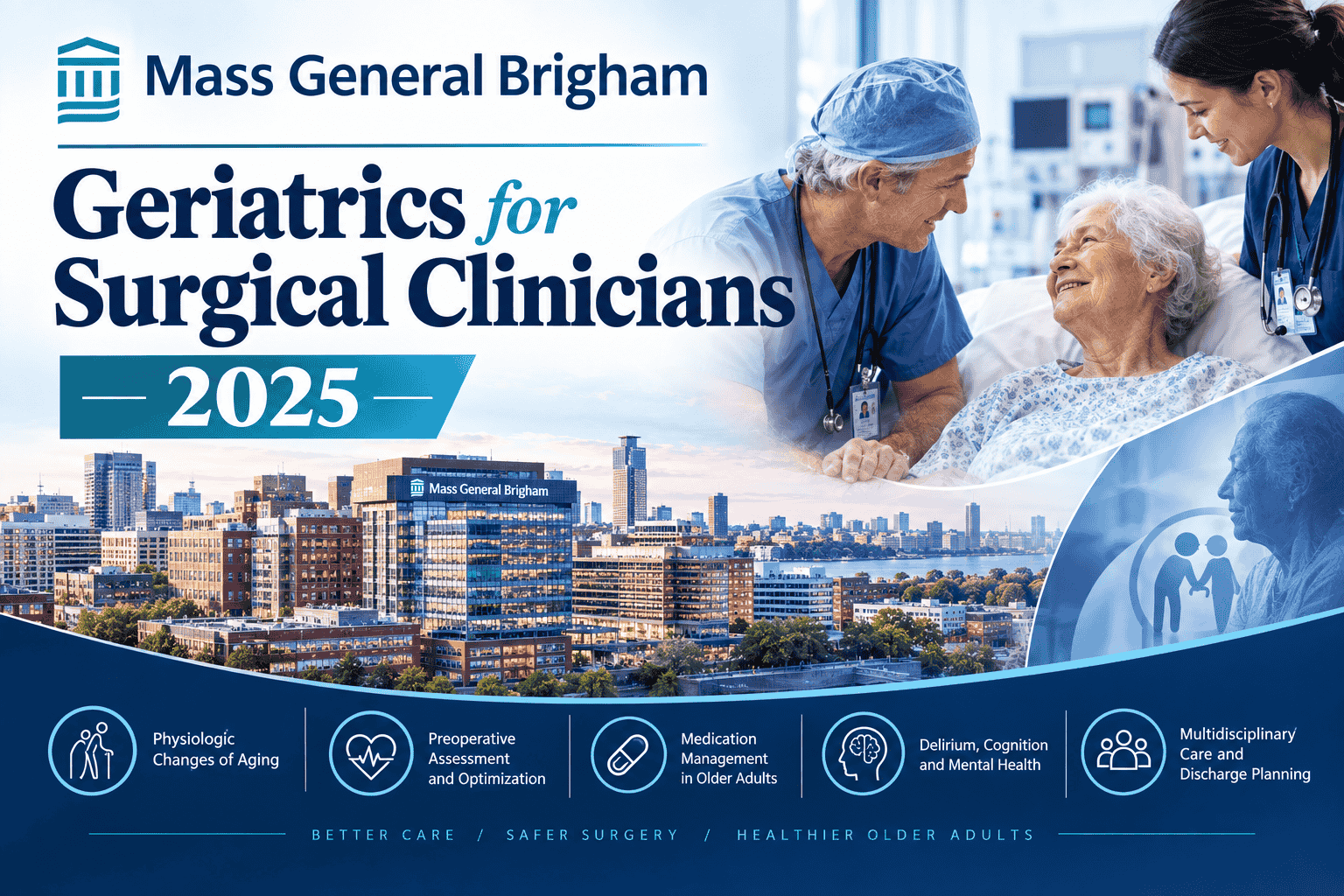
In the United States, almost 40% of all inpatient procedures are performed on patients aged 65 and older, and at major trauma centers over 50% of injured patients are older adults, the majority of whom are frail. To prepare healthcare systems to care for growing numbers of older adults presenting with increasing medical and psychosocial complexity, frontline clinicians urgently require dedicated training in geriatric syndromes and the 5Ms framework (Medication, Mobility, Mentation, what Matters, and Multicomplexity).
This comprehensive course addresses the distinct clinical needs of geriatric surgical patients to prevent common hazards of hospitalization, including postoperative delirium, falls, surgical site infections, loss of functional independence, and caregiver strain. These challenges are especially critical across surgical and trauma care, where morbidity and mortality are markedly higher in older patients compared to younger cohorts. Grounded in standards established by the American College of Surgeons (ACS) and CMS, this program provides clinicians with practical, evidence-based tools to implement geriatric-focused perioperative care pathways that reduce ICU utilization, shorten hospital length of stay, minimize readmissions, and align surgical interventions with patients’ core priorities.
Learning Objectives
Upon completion of this activity, participants should be able to:
-
Describe and apply the 5Ms framework (Medication, Mobility, what Matters, Mentation, and Multicomplexity) to the comprehensive care of older surgical patients.
-
Perform structured assessments for delirium, initiate prompt workups for precipitating factors, manage underlying etiologies, and implement non-pharmacologic and pharmacologic safe care plans.
-
Recognize clinical risk factors for falls and fractures, and formulate actionable pre-habilitation and postoperative plans to optimize mobility throughout the surgical continuum.
-
Conduct thorough medication reconciliations, identify potentially inappropriate medications using Beers Criteria, and apply safe deprescribing practices for surgical patients.
-
Assess what matters most to older patients and integrate their individualized values, goals of care, and priorities into surgical decision-making.
-
Associate major geriatric syndromes (including frailty and dementia) with adverse postoperative outcomes to guide risk stratification.
-
Coordinate safe, patient-centered care transitions and engage caregivers and surrogates effectively before, during, and after surgical interventions.
Target Audience
- This activity is intended for surgical clinicians, nurses, and physician assistants internal & external to the Mass General Brigham system.
- Best for General Surgeons, Trauma Surgeons, Orthopedic Surgeons, Anesthesiologists, Geriatricians, Palliative Care Specialists, and Physical Medicine and Rehabilitation Specialists (Physiatrists).
Topics
-
Keynote: Surgery in Older Adults: An Age-Friendly Approach
-
Mentation: Preventing and Addressing Delirium in Surgical Patients
-
Case-based Workshop: Delirium and Dementia in Surgical Cases
-
What Matters Most: Addressing Goals and Priorities for Surgical Patients
-
Frailty in Older Surgical Patients
-
Case-based Workshop: Supporting Caregivers and Surrogates Before, During, and After Surgery
-
Rehab, Prehab and Falls: Optimizing Mobility Throughout the Surgical Continuum
-
Multicomplexity: Considering Transitions of Care and Payment Models for Geriatric Surgery Patients
-
Case-based Workshop: Serious Illness Conversations: A Guide for Communication About Goals of Care
-
Perioperative Care for the Older Adult (Day 1 & Day 2 General Sessions)
-
Introduction to Day 2: Navigating Multicomplexity in Older Surgical Patients
-
Peri-operative Evaluation of Geriatric Surgery Patients
-
Case-based Workshop: Pre-operative Evaluation and Pre-habilitation
-
Medications: Polypharmacy and Deprescribing for Surgical Patients
-
Case-based Workshop: Medications: Geriatric Surgical Cases
-
Anesthesia and Pain Management in Older Surgical Patients
-
Case-based Workshop: Surgical Pain Management for Older Adults
-
Panel Discussion
-
Course Wrap Up


Reviews
There are no reviews yet.