Description
+ Include: videos + file sub vtt + pdf, size: GB
+ Target Audience: Hospitalists, Emergency Physicians, Internists, Critical Care Physicians, Cardiologists, Pulmonologists, Hematologists, Medical Oncologists, Gastroenterologists, Nephrologists, Neurologists, General Surgeons, and Palliative Care Specialists
+ Sample video: contact me for sample video
+ Information:
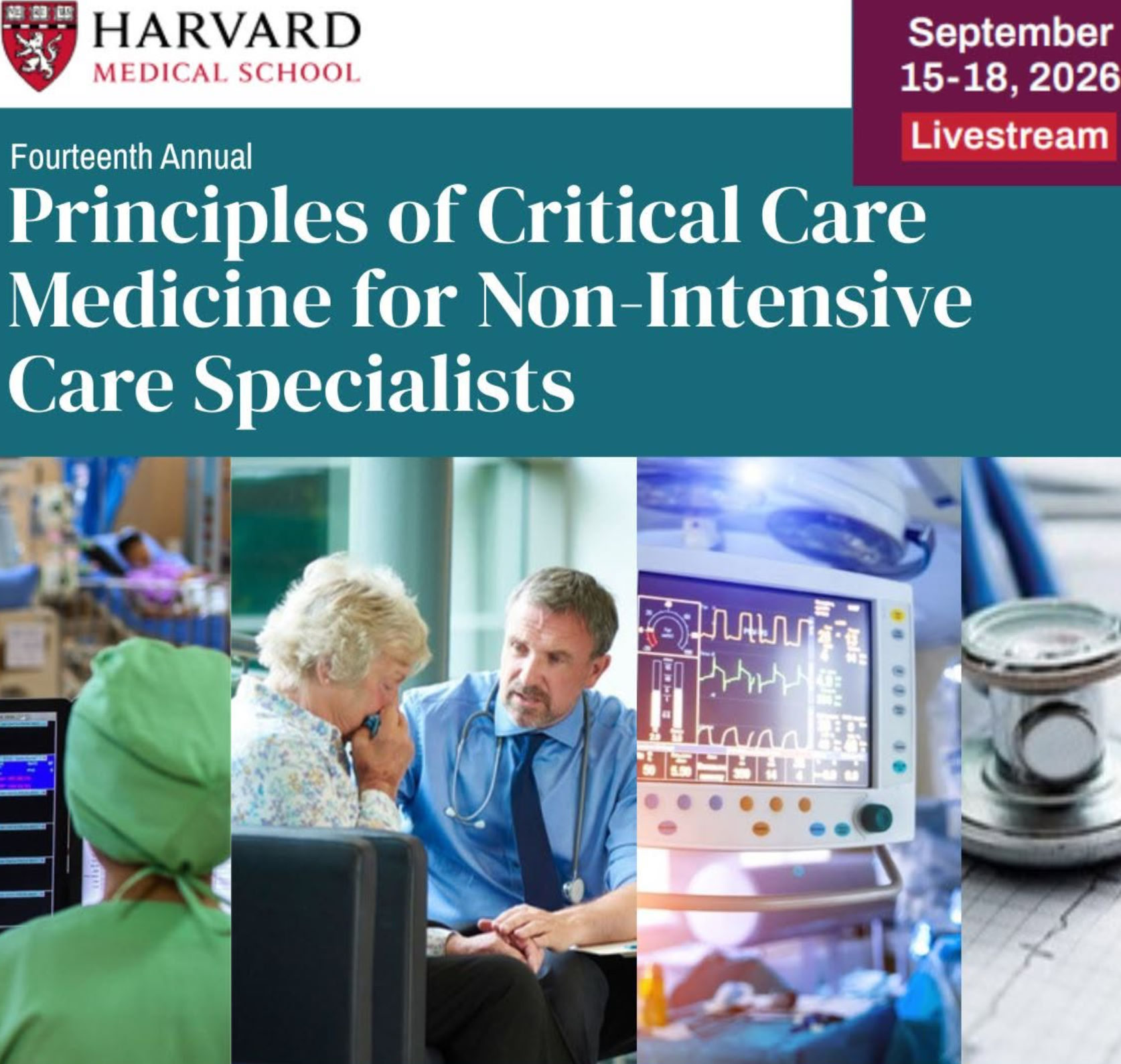
Principles of Critical Care Medicine for Non-Intensive Care Specialists is an intensive continuing medical education program offered by Harvard Medical School. As hospital acuity continues to escalate, clinicians outside traditional ICUs—including hospitalists, emergency physicians, internists, and surgical teams—increasingly encounter patients with rapid physiological deterioration and multi-organ failure. Designed to bridge the critical knowledge gap between general inpatient practice and intensive care units, this curriculum delivers pragmatic, high-yield guidance on the recognition, stabilization, and initial management of life-threatening medical, surgical, cardiac, and neurological emergencies. Through case-based reviews, rapid refresher modules, and bedside diagnostic strategies, the program equips frontline providers with practical decision-making tools to manage hemodynamic instability, acute respiratory failure, mechanical ventilation, and multi-organ failure with greater competence and autonomy.
Learning Objectives
Upon completion of this activity, participants should be able to:
-
Formulate evidence-based diagnostic algorithms and rapid resuscitation strategies for undifferentiated shock, including the physiological selection, titration, and de-escalation of vasopressors and inotropes.
-
Initiate and troubleshoot invasive and non-invasive mechanical ventilation, interpret arterial blood gases (ABGs), and execute lung-protective strategies and recruitment maneuvers in acute respiratory failure.
-
Identify and rapidly manage acute cardiovascular emergencies in the ICU setting, including cardiogenic shock, malignant ventricular tachycardias, atrial fibrillation, acute coronary syndromes, and mechanical circulatory support.
-
Perform prompt risk stratification and interventions for life-threatening acute medical emergencies, including severe sepsis/septic shock, hemorrhagic shock, diabetic ketoacidosis (DKA), hyperglycemic hyperosmolar state (HHS), massive pulmonary embolism, and acute liver failure.
-
Integrate point-of-care ultrasound (POCUS) and bedside hemodynamic monitoring to assess volume responsiveness and guide fluid resuscitation.
-
Recognize oncologic, hematologic, and immunosuppressed host emergencies, including cytokine release syndrome, immune effector cell-associated neurotoxicity syndrome (ICANS), immune checkpoint inhibitor toxicities, and neutropenic sepsis.
-
Optimize multidisciplinary ICU supportive care, including analgesia, sedation, delirium prevention, alcohol and opioid withdrawal, palliative care integration, and safe extubation practices.
Target Audience
This course is intended for hospitalists, general internists, emergency physicians, surgeons, anesthesiologists, advanced practice clinicians (NPs and PAs), and other non-intensive care specialists who provide inpatient or transitional care to critically ill patients.
Best for Hospitalists, Emergency Physicians, Internists, Critical Care Physicians, Cardiologists, Pulmonologists, Hematologists, Medical Oncologists, Gastroenterologists, Nephrologists, Neurologists, General Surgeons, and Palliative Care Specialists.
Topics
-
Core Shock, Hemodynamics & Resuscitation
-
Welcome from the Course Directors
-
Shock and Vasopressors: A Case-Based Physiologic Approach
-
From Infusion to Ingestion: Best Practices for Oral Vasopressor Use in 2026
-
Red Alert Practical Tips for Managing the Patient with Hemorrhagic Shock
-
Burning Clinical Question: Should I Start Steroids for Shock?
-
Rapid Refresher: Sepsis in 2026
-
POCUS and More Practical Tips for Assessing Volume Responsiveness at the Bedside
-
-
Cardiovascular Critical Care & Arrhythmias
-
Diagnosis and Management of Cardiogenic Shock in 2026
-
Quick Hit: NSTEMI in the ICU – What Do I Do?
-
Management of Ventricular Tachycardia in the ICU
-
Management of AFib and Other Arrhythmias What Every Intensivist MUST Know
-
Starting, Stopping, Bridging Anticoagulation for Atrial Fibrillation
-
The Anatomy and Physiology of Pacemakers and ICDs
-
Rapid Refresher: ECGs You MUST Know
-
Quick Hit: The Anatomy of an Echo Report – What Every Intensivist Must Know
-
Echo Essentials Every Intensivist Must Know
-
Mechanical Circulatory Support What Every Intensivist Must Know
-
Left and Right Heart Failure in the ICU: Tips and Tricks for Diagnosis and Management
-
Updates in the Management of Massive and Submassive PE: What’s New in 2026
-
Case Studies in Cardiac Critical Care
-
ACLS Pearls, Pitfalls and Practical Applications for the Intensivist
-
Burning Clinical Question: What Temperature Should I Target After ROSC?
-
-
Pulmonary, Mechanical Ventilation & Airway Management
-
Rapid Refresher: The ABCs of ABGs
-
Vents 101: A Review for Beginners
-
Vents 102: Moving Your Knowledge from Plateau to Peak
-
Management of Respiratory Failure in 2026
-
Best Practices for Managing Asthma and ECOPD in the ICU
-
Burning Clinical Question: How Do I Do a Recruitment Maneuver?
-
Connecting Function to Physiology: HFNC and Other Respiratory Devices You MUST Know
-
Non-Invasive Ventilation in the ICU: Evolution, Evidence and the Expertise You Need
-
Burning Clinical Question: What Settings Should My Patient Be on for a Spontaneous Breathing Trial?
-
Practical Tips for Extubating Difficult-to-Wean Patients
-
Burning Clinical Question: Should I Transfer My Patient for Consideration of VV ECMO?
-
Quick Hit: Anatomy and Physiology of Chest Tube Drainage System
-
Pneumothorax Management for the General Intensivist
-
Burning Clinical Question: Should I Drain This Pleural Effusion?
-
Self-Study On-Demand: Tracheostomy Tips What Every Intensivist Must Know
-
-
Infectious Diseases & Sepsis in Critical Care
-
Burning Clinical Question: What’s New in Pneumonia in 2026?
-
Five Infectious Disease Emergencies You Must Know
-
Respiratory Failure in the Immunocompromised Host: Is Anything Done Differently?
-
-
Hematology, Oncology & Transfusion Medicine
-
Heme-Onc Emergencies You Cannot Miss
-
Diagnosis and Management of Neutropenic Sepsis
-
Rapid Refresher: What the Intensivist Needs to Know about Hematopoietic Stem Cell Transplant in the ICU
-
Cutting-Edge Cancer Therapies What Every Intensivist Must Know to Manage and Safely Transfer Patients
-
Rapid Refresher: Immune Checkpoint Inhibitor Toxicities the ICU Provider MUST Know
-
Burning Clinical Question: Does My Patient with ICANS Need the ICU?
-
Quick Hit: Tips for Anticoagulant Reversal
-
Tales from the Blood Bank What Every Intensivist Must Know
-
Burning Clinical Question: Does My Patient Have Acute Chest Syndrome?
-
-
Metabolic, Renal & Endocrine Critical Care
-
Sugar, Sugar: Management of DKA and HHS in the ICU
-
What Every Intensivist Must Know – Part 1: Acid Base Disorders in the ICU
-
What Every Intensivist Must Know – Part 2: Electrolyte Abnormalities
-
Rapid Refresher: Nutrition in the ICU
-
-
Gastrointestinal & Surgical Emergencies in the ICU
-
To Scope or Not to Scope: The Endoscopist’s Perspective of GI Bleeding in the ICU
-
Critical Care Management of the Patient with Liver Failure
-
Can’t-Miss Surgical Emergencies for the General Intensivist
-
-
Neurological Emergencies & Neuro-Critical Care
-
Neuro Quick Hit: Diagnosis and Management of Seizures in the ICU
-
Neuro Quick Hit: The ABCs of IPH for the General Intensivist
-
Self-Study On-Demand: Altered Mental Status in the ICU: A Case-Based Approach
-
Self-Study On-Demand: Burning Clinical Question: Does My Patient Need a Head CT?
-
-
Sedation, Toxicology, Addiction & Delirium Management
-
Beyond Sedation: Multimodal Management of Pain, Agitation and Delirium
-
Burning Clinical Question: When Do I Need to Stop Propofol for High Triglycerides?
-
Agitation and Aggression in the Critically Ill: A Psychiatrist’s Perspective
-
Tips and Tricks for Diagnosing and Managing Alcohol Withdrawal in Your ICU
-
Self-Study On-Demand: Quick Hit: Managing Opioid Withdrawal in the ICU
-
Rapid Refresher: Tylenol Toxicity in the ICU
-
Toxicology 101: Four Tips for the Intensivist
-
-
Communication, Palliative Care, Quality & Humanizing the ICU
-
Burning Clinical Question: What Is a Time-Limited Trial?
-
Burning Clinical Question: How Can I Communicate with My Intubated Patient?
-
Practical Tips for Incorporating Palliative Care into the ICU
-
Critical-Illness Survivorship: What Every Intensivist Must Know
-
Humanizing Harm: Best Practices for Discussing Harm Experienced by Critically Ill Patients and Families
-
Humanizing the ICU: Strategies to Improve Care of Patients and Providers
-
Critical Thinking in Critical Care: Thinking Strategies to Minimize Cognitive Errors in the ICU
-
Artificial Intelligence in Action: Practical Strategies to Optimize Your ICU Performance
-
Self-Study On-Demand: Quality Control: CAUTI, CLABSI and HAPI Mitigation for Your ICU
-
Ripped from the Case Files: Challenging Cases in Critical Care
-


Reviews
There are no reviews yet.