Description
+ Include: videos + file sub vtt + pdf, size: GB
+ Target Audience: pathologists, endocrinologists, ophthalmologists, nurses, gastroenterologists, intensivists, radiologists, surgeons, anesthesiologists, oncologists, pulmonologists, cardiologists, and psychiatrists
+ Sample video: contact me for sample video
+ Information:
1. Overview
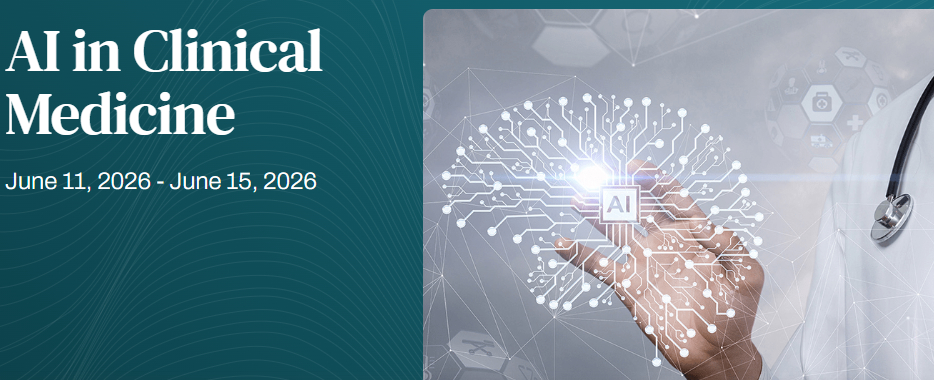
Over the last few decades, the digitization of medical records has created opportunities for automation and data-driven clinical support for a wide range of routine clinical applications. Today, artificial intelligence (AI) is accelerating innovation in health care. We are on the cusp of revolutionizing how we care for patients in profound ways.
New technologies are available now to help you impact your practice. AI medical scribes, new research tools and diagnostic tests, and personalized treatment options are just a few applications of AI that are beginning to have a direct impact on clinicians and the patients they serve.
Up until now, most health care providers have not received formal training in artificial intelligence. Now is the time for physicians, nurses, advanced practice providers, and all allied health professionals to prepare for how AI is changing medical care.
This live online course focuses on cutting edge and exciting new applications of AI, including foundational principles and lessons learned that you will be able to take directly back to your practice. Over three days, you will hear from medical society leaders, academic leaders, and innovators from academia and industry.
Sessions will dive into the applications of AI in diagnosing diseases, predicting patient outcomes, patient monitoring, and personalizing treatment plans. Through lectures, field-specific break-out sessions, and real-world case studies, you will acquire the knowledge to harness AI’s potential to advance patient care, research, and health systems innovation. Faculty experts will explore the ethical implications, challenges, and opportunities inherent in integrating AI into modern health care practice.
During this course we will cut through the hype around AI to provide realistic, firsthand viewpoints into the potential of AI in clinical practice. Health care professionals, including physicians, nurses, nurse practitioners, physician assistants, and other practitioners are highly encouraged to join us for this transformational learning experience.
2. Learning Objectives Upon completion of this course, participants will be able to:
-
Define the unique challenges and opportunities for integrating AI in specialized health care fields.
-
Discuss the ethical considerations and potential biases in AI algorithms, especially in decision-making processes related to patient care, diagnosis, and treatment planning.
-
Review the current status area of AI regulation and how it can impact health care.
-
Assess the long-term quality and accuracy of AI technologies and their impact on patient care.
-
Develop methods for integrating AI into medical education, including content generation, evaluation, and ensuring alignment with educational objectives.
3. Target Audience
- Who Should Participate: Clinicians treating patients in any type of setting including, physicians, nurses, nurse practitioners, and clinical leaders.
- Best for pathologists, endocrinologists, ophthalmologists, nurses, gastroenterologists, intensivists, radiologists, surgeons, anesthesiologists, oncologists, pulmonologists, cardiologists, and psychiatrists.
4. Topics
-
Keynote: Paging Dr. A.I.: How AI is Changing the Face of Clinical Care
-
Learning the AI Lingo: Machine Learning, Deep Learning, and Large Language Models
-
A Look Into the Black Box: Technical Background for Clinicians
-
Medical Data as the Backbone of AI
-
Chatbots in Health Care: A Historical Expedition
-
AI Learning Revolution: Transforming Medical Education
-
Ambient Scribes
-
An AI designed drug for IPF: from preclinical development to phase II in under 3 years
-
Precision Medicine: AI and Personalized Treatment in Oncology
-
AI Powered Drug Repositioning and Clinical Trial Design
-
Keynote: Ethics and AI in Healthcare
-
AI for Pioneering Leadership in the Digital Era
-
Law and Regulation in AI
-
Telemetry/Mhealth for early detection of heart failure exacerbation
-
Brain computer interfaces and decoding speech
-
Can Chat bots improve mental health?
-
Bias in Risk Stratification for allocation and policy
-
Robust, Fair and private AI
-
Algorithmic bias in clinical scores and implications for AI
-
But I Want it Now!: Barriers to Clinical AI Implementation
-
How Can I Help You? Clinical Decision Support in the EHR
-
Implementing AI in your small practice
-
Hidden risks of AI in your practice
-
Money Talks: How AI Can Help You Improve Your Bottom Line
-
AI and Reducing Healthcare Provider Burnout
-
Why AI may be good for our health but hurt our wallets
-
Study Hall – Clinical Applications: Pathology
-
Study Hall – Clinical Applications: Endocrinology
-
Study Hall – Clinical Applications: Ophthalmology
-
Study Hall – Clinical Applications: Nursing
-
Study Hall – Clinical Applications: Gastroenterology
-
Study Hall – Clinical Applications: Critical Care
-
Study Hall – Clinical Applications: Radiology
-
Study Hall – Clinical Applications: Surgery or Anesthesia
-
Virtual demonstrations: Ambient Scribe from Abridge
-
Virtual demonstrations: Leveraging clinician’s expertise with Agentic AI
-
Virtual demonstrations: Evidence search using OpenEvidence
-
Virtual demonstrations: Doctronic
-
Virtual demonstrations: Uptodate Expert AI
-
Virtual demonstrations: Glasshealth’s clinical decision support platform


Reviews
There are no reviews yet.