Description
+ Include: videos, size: GB
+ Target Audience: Pediatric Neurologists, Pediatricians, Neurogeneticists, Neurosurgeons, Neuroimmunologists
+ Sample video: contact me for sample video
+ Information:
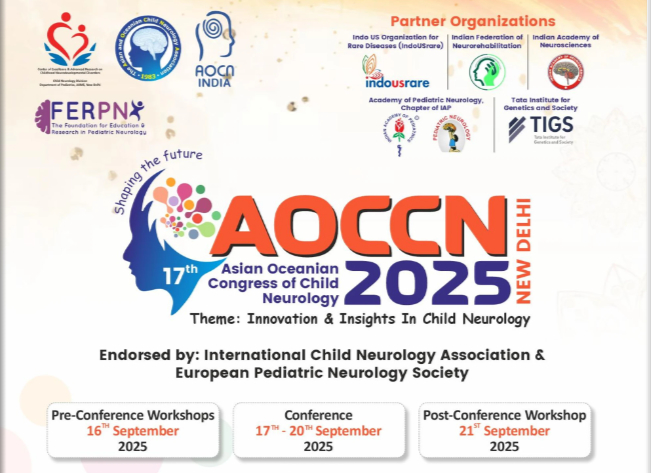
The 17th Asian Oceanian Congress of Child Neurology (AOCCN) is scheduled to be held from September 17 to 20, 2025, at the YASHOBHOOMI – India International Convention and Expo Centre in New Delhi, India. The congress aims to amalgamate technological advances and groundbreaking innovations with current clinical practices in child neurology, providing a global perspective with strong relevance to the Asia-Oceanic region. The event will feature parallel sessions, pre-conference and post-conference workshops, poster and podium presentations, and cultural activities, expecting over 2,000 national and international delegates.
Learning Objectives
-
To explore and integrate technological advances and digital innovations, including AI, in the management and diagnosis of pediatric neurological disorders.
-
To analyze the clinical, neuroimaging, and genetic aspects of complex neurodevelopmental disorders, such as autism spectrum disorders, cerebral palsy, and leukodystrophies.
-
To evaluate current and novel therapeutic approaches for pediatric epilepsies, including developmental and epileptic encephalopathies, drug-refractory epilepsy, and dietary/neuromodulation therapies.
-
To understand the evolving genetic landscape and precision medicine applications in childhood neurological disorders, including neuromuscular diseases and neurometabolic disorders.
-
To develop strategies for managing acute pediatric neurological emergencies, neurocritical care, and neuroinfections.
Target Audience
- The conference will be attended by over 2000 national and international delegates and eminent international stalwarts, academicians, and researchers as expert faculty.
- Best for Pediatric Neurologists, Pediatricians, Neurogeneticists, Neurosurgeons, and Neuroimmunologists.
Topics
-
Pre-Conference Workshops
-
Decoding the Phenomenology of Pediatric Movement Disorders
-
Understanding Pediatric Sleep Medicine Armamentorium
-
Demystifying Cytomolecular Genetics for Pediatric Neurologists
-
Ketogenic Diet in Pediatric Neurology Current Trends and Way Forward
-
Clinical Applications of Neuromodulation
-
Understanding the Enigma of Autism Spectrum Disorder
-
Changing Paradigms in the Management of Neuromuscular Disorders
-
New Frontiers in Neuroimmunology
-
-
Day 1
-
E-POSTER PRESENTATIONS Young Members – Meet & Greet
-
Inauguration Ceremony
-
Plenary Talk
-
Plenary Symposium
-
Prof. Fukuyama Memorial Oration
-
Hall A: Converging networks and approachments to autism and epilepsy with movement disorders; Debates; Developmental and Epileptic Encephalopathies (DEEs) – Concepts, Current and Novel Therapeutic Approaches; Drug Refractory Epilepsy; Immune-Mediated Pathways in Autism and other neurodevelopmental disorders; AFTERNOON SESSION – PART I; AFTERNOON SESSION – PART II.
-
Hall B: Autism Spectrum Disorders; Cerebral Palsy; Emerging genetic and therapeutic landscape in children with MeCP2 related disorders; Hot Topics in Neurology; Leukodystrophies in Pediatric Patients, clinical, neuroimaging, genetic; Platform presentations.
-
Hall C: Case-based approach to neurological emergencies in pediatrics; Current Pediatric Neurology – Snapshots; Emerging concepts in management of Sodium Channelopathies – Dravet syndrome and beyond; Infantile Epilepsy Syndromes (IESs) and Infantile Epileptic Spasm Syndrome (IESS); Neurocritical Care; Platform presentations.
-
Hall D: Autism and the Adolescent Brain Optimizing Psychiatric and Behavioural Outcomes through Medical Management VIDEO NOT RELEASE; Fever, Inflammation, and Epilepsy Encephalopathy VIDEO NOT RELEASE; Neuroinfections; Platform presentations; The pearls in diagnosis of cerebellar disorders; Video Quest.
-
-
Day 2
-
CULTURAL PROGRAM & GALA DINNER
-
Plenary Talk
-
Plenary Symposium
-
LUNCH-EON SYMPOSIUM
-
Hall A: Debates; Early beginnings and lifelong impact Navigating neurological challenges in the fetus and newborn; Ketogenic dietary therapies for epilepsy in diverse resource settings; Neurogenetics; Tech-driven innovations for managing epilepsy in children From schools to communities and clinics; AFTERNOON SESSION.
-
Hall B: Hot Topics in Neurology; Pediatric Headache; Phenylketonuria in 21st century From newborn screening to novel treatments; Platform presentations; Transitional and Palliative Care in Child Neurology; Vitamins and cofactorsresponsive childhood neurological disorders.
-
Hall C: An update on presurgical evaluation in a child with Drug Resistant Epilepsy; Cerebral Palsy; Challenges in Transforming Child Neurology with IGAP Unified Efforts in Asian-Oceanian Countries; Current Pediatric Neurology Snapshots; Oculomotor involvement in Acute Pediatric Neurological disorders; Platform presentations.
-
Hall D: 3Cs of Status Epilepticus Consensus, Controversies and Confusions; Beyond the blow Neuroplasticity and Predictors of recovery in pediatric traumatic brain injury; Innovations and Future Directions in Non Genetic Drug-Resistant Epilepsies; Pediatric Stroke; Platform presentations; Video Quest.
-
-
Day 3
-
Plenary Talk
-
Plenary Symposium
-
Lunch-eon Symposium “Empowering patients in SMA” by ROCHE
-
Legal Issues in Medical Practice Current perspectives
-
Hall A: Debates; Evolving therapies for muscular dystrophies Beyond dystrophinopathies; Neuromuscular Disorders; NeuroTech Frontiers Harnessing AI and Digital Innovation in Pediatric Neurology; Recent Advances in the Treatment of Drug Resistant Epilepsy; Afternoon Session – Part I; Afternoon Session – Part II.
-
Hall B: A multidimensional symposium on pediatric movement disorders A bird’s eye view; Cannabidiol in childhood epilepsy – Current status and future challenges for the AsiaOceania region; Little Minds, Big Challenges Pediatric Neurology Quiz; Pediatric Neuromodulation; Platform presentations; Responsive neurostimulation device therapy in children with refractory epilepsy.
-
Hall C: Consensus guidelines of MOGAD; Current Pediatric Neurology – Snapshots; Feeding the Developing Brain Nutrition in Child Neurology; Pediatric Neuroimmunology; Platform presentations; Precision Medicine and Challenges in Hereditary Neuromuscular Diseases.
-
Hall D: Advances in Pediatric Neurorehabilitation Restoring Function, Empowering Futures; From Variant to Verdict Interpreting Genetic Reports in Child Neurology Practice; Pediatric Movement Disorders & Epilepsy; Platform presentations; Targeting the tumbles New horizons in management of inherited ataxias; Video Quest.
-
-
Day 4
-
Plenary Talk
-
Hall A: Intersecting Spectrums Clinical and Neurobiological Interfaces of Autism and Epilepsy; Neurocutaneous Syndromes From Skin Clues to Brain Insights; Supporting children with developmental disabilities in low-income contexts.
-
Hall B: Charot-Marie-Tooth Disease a stroll through advances in diagnosis and management; Dietary therapies in Pediatric Neurology Beyond Epilepsy; Sensory pathways at the crossroads – Integrating vision and hearing in neurological disorders.
-
Hall C: An overview of novel treatable neurometabolic disorders; Ethics, Research & Publications in Child Neurology; Navigating the Wave of Next-Generation Sequencing.
-
Hall D: Genomics in neurology training is it a boon or bane; Neonatal Seizure Current approachments and novel modalities; Pediatric Neurooncology Innovations in Diagnosis, Treatment, and Survivorship.
-
-
Post-Conference Workshops
-
Current Pediatric Neurology for the Pediatricians
-


Reviews
There are no reviews yet.