Description
+ Include: videos + file sub vtt + pdf, size: GB
+ Target Audience: adult and pediatric neurologists, neurosurgeons, pediatricians, emergency medicine, critical care, infectious disease, and primary care physicians
+ Sample video: contact me for sample video
+ Information:
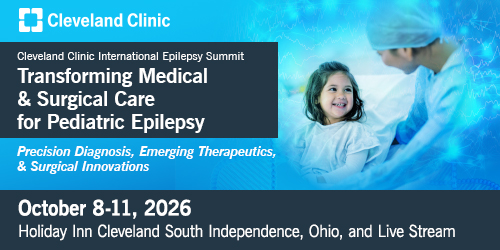
The Cleveland Clinic International Epilepsy Summit is a comprehensive, multi-day summit bringing together leading experts and innovative thinkers to explore breakthroughs and best practices in pediatric epilepsy care. Bringing together international leaders in pediatric epilepsy, neurology, neurosurgery, genetics, and artificial intelligence, the summit provides an in-depth review of the global burden of pediatric epilepsy, advances in early diagnosis, and contemporary therapeutic strategies. The summit emphasizes precision diagnosis and individualized care, highlighting innovations in EEG, advanced imaging, invasive evaluation, medical management of drug-resistant epilepsy, dietary therapies, including neuromodulation, and emerging pharmacologic approaches.
A central focus of the summit is the evolution of pediatric epilepsy surgery and future-facing innovation, with extensive coverage of stereoelectroencephalography (SEEG), minimally invasive and SEEG-guided surgical techniques, and outcomes-driven patient selection. Additional sessions explore the rapidly expanding role of artificial intelligence in seizure prediction, EEG interpretation, and clinical decision making; advances in genetics and precision medicine; and next-generation therapies including brain–computer interfaces and integrated care models. Through expert lectures, panel discussions, and real-world clinical insights, this summit aims to equip clinicians with evidence-based strategies and practical tools to improve outcomes and advance care for children with epilepsy worldwide.
Target Audience
This educational activity is intended for adult and pediatric neurologists, neurosurgeons, pediatricians, emergency medicine, critical care, infectious disease, and primary care physicians, fellows, residents, psychologists, nurse practitioners, physician assistants, neuroscientists, molecular biologists, pathologists, and geneticists.
Learning Objectives
After completing this educational activity, participants will be able to do the following:
- Summarize the clinical impact of the global burden of pediatric epilepsy, recent diagnostic innovations, and advanced strategies for timely management.
- Describe the technical advances in diagnostic modalities for pediatric epilepsy, especially electroencephalogram and imaging studies, and discuss their implications on clinical care.
- Critically review current clinical strategies for treating drug-resistant pediatric epilepsy and epileptic encephalopathies, including neuromodulation, and dietary options
- Discuss the clinical impact of advances in pediatric epilepsy surgery, especially in stereoelectroencephalography (SEEG), as it relates to management strategies and eligible populations.
- Review recent innovations in SEEG-guided epilepsy surgery and describe their potential use in pediatric patients with epilepsy.
- Discuss the current state and future innovations in the next-generation of antiseizure medications and medical therapies in epilepsy.
- Describe future use of artificial intelligence (AI) to improve the detection, diagnosis, monitoring, and treatment of patients with epilepsy.
- Discuss the role of genetic testing, therapy, and targeted treatments in improving the accuracy of precision medicine for patients with epilepsy.
- Summarize how advances in brain-computer interfaces, development of next-generation therapies, and integration of AI and genetics can influence care models in pediatric epilepsy.
+ Topics:
|
1:00-4:00 pm
|
Tour of the AI-enabled Epilepsy Central Monitoring Unit (eCMU) monitoring of the new Cleveland Clinic Neurological Institute building |
|
4:30 pm
|
Registration / Exhibits |
|
5:30 pm
|
Welcome and Introductions
Imad Najm |
|
5:45 pm
|
Opening Keynote: Epilepsy Surgery in the Precision Era: Challenges and Opportunities
William Bingaman
Moderator: Imad Najm |
|
6:30 pm
|
Adjourn |
|
6:30 pm
|
Reception |
|
7:30 am
|
Continental Breakfast / Exhibits |
|
Session I: Foundations of Epilepsy: Global Burden, Diagnosis, and Early Intervention
Moderator: Prakash Kotagal
|
|
8:00 am
|
Global Burden of Epilepsy
John B. Ingram |
|
8:30 am
|
Advances in Pediatric Epilepsy Diagnosis
Douglas Nordli |
|
9:00 am
|
The Importance of Early Management of Pediatric Epilepsy
Ajay Gupta |
|
9:30 am
|
Panel Discussion: Diagnostic Challenges in Low-Resource Settings
Session Faculty |
|
10:00 am
|
Break / Exhibits |
|
Session II: Modern Diagnostic Strategies in Epilepsy: EEG, Imaging, and Invasive Evaluation
Moderator: Douglas Nordli
|
|
10:30 am
|
Advances in EEG and Imaging for Pediatric Epilepsy Diagnosis
Maksim Parfyonov |
|
11:00 am
|
SEEG in Pediatric Epilepsy: Cleveland Clinic Experience
Ahsan Moosa Naduvil Valappil |
|
11:40 am
|
Challenges in Diagnosing Rare Epilepsy Syndromes
Rima Nabbout |
|
12:10 pm
|
Panel Discussion & Q&A
Session Faculty |
|
12:30 pm
|
Lunch / Exhibits |
|
Session III: Contemporary Therapeutic Strategies in Pediatric Epilepsy
Moderators: Deepak Lachhwani and Angeles Schteinschnaider
|
|
2:00 pm
|
Medical Management of Drug-Resistant Pediatric Epilepsy
Raman Sankar |
|
2:30 pm
|
Treatment of Epileptic Encephalopathies: A Practical Approach
Elia Pestana Knight |
|
2:55 pm
|
Neuromodulation in Children: VNS, RNS, and DBS
Dileep Nair |
|
3:25 pm
|
Dietary Therapies in Pediatric Epilepsy
Eric Kossoff |
|
3:45 pm
|
Panel Discussion
Session Faculty |
|
4:15 pm
|
Break / Exhibits |
|
5:00 pm
|
Evening Keynote: SEEG at the Crossroads: Integrating Fundamentals with Pathophysiological Modeling and Imaging
Patrick Chauvel |
|
6:00 pm
|
Adjourn |
|
6:00 pm
|
Reception/Dinner |
|
7:30 am
|
Continental Breakfast / Exhibits |
|
Session IV: Artificial Intelligence in Epilepsy: Predication, Decision-Making, and Clinical Responsibility
Moderator: Paul Ford
|
|
8:00 am
|
Artificial Intelligence in Pediatric Epilepsy: From Pattern Recognition to Clinical Decision-Making
Leonardo Bonilha |
|
8:30 am
|
AI in EEG Analysis
Balu Krishnan |
|
9:00 am
|
The Future of Precision Epilepsy: Integrating AI, Imaging, Genetics, and Cognition
Patrick Kwan |
|
9:30 am
|
From Data to Decisions: Scalable AI and Predictive Analytics in Epilepsy Care
Raymond Ng |
|
10:00 am
|
Panel Discussion: Ethical Considerations and Challenges of AI in Epilepsy Care
Session Faculty |
|
10:30 am
|
Break / Exhibits |
|
Session V: Epilepsy Surgery Beyond Resection: SEEG-Guided Innovation and the Future
Moderators: Andreas Alexopoulos and Walter Silva
|
|
11:00 am
|
SEEG as a Network Tool: Rethinking Surgical Targets
Andreas Alexopoulos |
|
11:30 am
|
AI and SEEG: From Signal Interpretation to Surgical Strategy
Demitre Serletis |
|
12:00 pm
|
SEEG-Guided Focal Ablation in Children and Adults: Lessons Learned from Thermocoagulation
Veronica Pelliccia |
|
12:30 pm
|
The Future of Epilepsy Surgery: SEEG, Genetics, and Targeted Interventions
Jean Khoury |
|
1:00 pm
|
Lunch / Exhibits |
|
Session VI: Modern Pediatric Epilepsy Surgery: SEEG Foundations and Clinical Mastery
Moderator: Ajay Gupta
|
|
2:30 pm
|
Advances in Pediatric Epilepsy Surgery
William Bingaman |
|
3:00 pm
|
SEEG in Children: Indications and Outcomes
Ahsan Moosa Naduvil Valappil |
|
3:30 pm
|
Special Considerations in Pediatric SEEG
Juan Bulacio |
|
4:00 pm
|
Challenges in Starting and Expanding SEEG Programs
Aleksandar Ristic |
|
4:30 pm
|
Break / Exhibits |
|
5:00 pm
|
Evening Keynote: Neuromodulation: Clinical Applications Informed by Science
Dominique Durand Moderator: Dileep Nair |
|
6:00 pm
|
Adjourn |
|
6:00 pm
|
Reception/Dinner |
|
7:30 am
|
Continental Breakfast / Exhibits |
|
Session VII: Genetics and Precision Medicine in Children and Young Adults with Epilepsy
Moderators: Elham Abushanab and Imad Najm
|
|
8:00 am
|
Genetic Testing in Epilepsy: Current State and Challenges
Christelle Moufawad El Achkar |
|
8:30 am
|
Gene Therapy and Targeted Treatments in Rare Pediatric Epilepsy Syndromes
Rima Nabbout |
|
9:10 am
|
From Genetic Discoveries to Diagnosis and Precision Treatment for Epilepsy
Sattar Khoshkhoo |
|
9:40 am
|
Panel Discussion: How Should Pediatric Epileptologists Change Practice Tomorrow?
Session Faculty |
|
10:00 am
|
Break / Exhibits |
|
Session VIII: Electroclinical Phenotypes of Common Genetic Epilepsies
Moderators: Jean Khoury and Elia Pestana-Knight
|
|
10:30 a.m.
|
From Electroclinical Syndromes to Genetic Etiology-Specific Syndromes. How Genetics Has Changed Our Views on Pediatric Epilepsy
Ingo Helbig |
|
10:55 a.m.
|
Tuberous Sclerosis. Genotype and Phenotype Clustering and as Predictors of Refractory Seizures and Neurodevelopmental Outcomes
Ajay Gupta |
|
11:20 a.m.
|
PRRT2 Variants from the Newborn to Adult Life: Seizures, Headaches, Ataxia, And Movement Disorder
Christelle Moufawad El Achkar |
|
11:45 a.m.
|
CDKL5, The Electroclinical Phenotype Is More Than Spasms Without Hypsarrhythmia
Heather Olson |
|
12:10 p.m.
|
Movement Disorders in Epilepsy Dyskinesia Syndromes
Angeles Schteinschnaider |
|
12:35 p.m.
|
Lunch/Exhibits |
|
Session IX: Next-Generation Therapies and Integrated Care Models in Pediatric Epilepsy
Moderators: Paul Ford and Imad Najm
|
|
1:30 pm
|
The Future of Epilepsy Care: What Will Change Clinical Practice in theNext Decade?
William Bingaman, Patrick Chauvel, Dominique Durand, Patrick Kwan, Rima Nabbout, Irene Wang, Dong Zhou |
|
3:00 pm
|
Adjourn |
|
4 -7:00 pm
|
Tour of the AI-enabled Epilepsy Central Monitoring Unit (eCMU) monitoring of the new Cleveland Clinic Neurological Institute building |



Reviews
There are no reviews yet.