Description
+ Include: videos + file sub vtt, size: GB
+ Target Audience: Orthopedists, Geriatricians, Gastroenterologists, Infectious Disease Specialists
+ Sample video: contact me for sample video
+ Information:
-
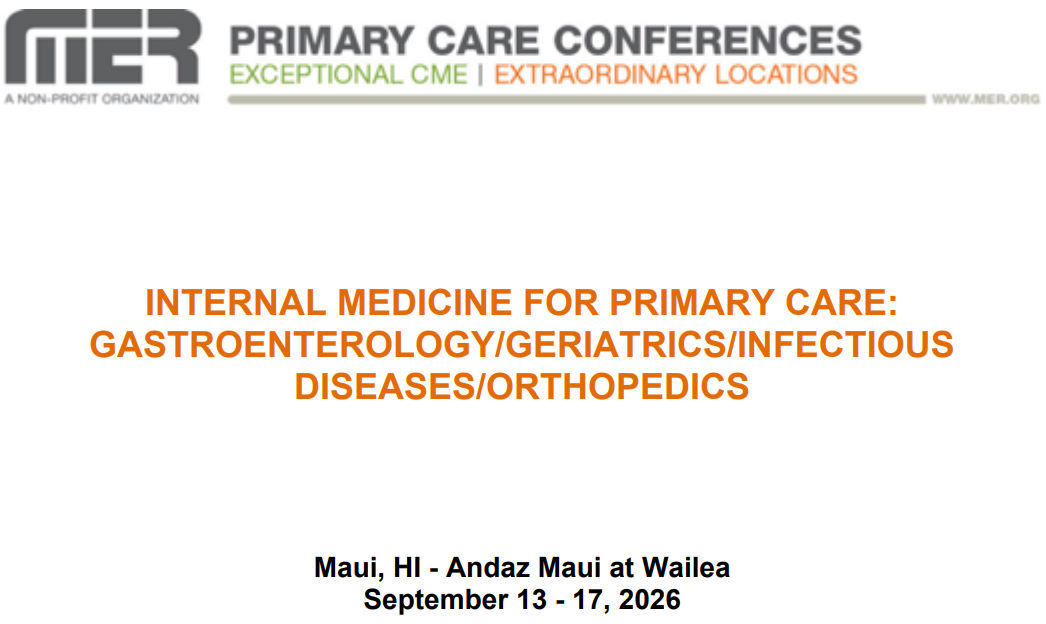
Conference: Internal Medicine for Primary Care: Gastroenterology / Geriatrics / Infectious Diseases / Orthopedics
-
Location: Andaz Maui at Wailea in Maui, HI
-
Dates: September 13-17, 2026
Learning Objectives
Upon completion of this program, participants should be better able to:
-
Describe the anatomy and function of the knee joint
-
Diagnose and treat orthopedic problems in the hip, thigh, knee and shoulder
-
Recognize chronic injuries and pain syndromes to the foot and ankle
-
Diagnose and treat shoulder injuries
-
Diagnose and treat wrist, hand, and finger injuries
-
Utilize a comprehensive geriatric assessment to identify potential issues in the elderly patient
-
Evaluate hypertension in both younger and older adults, differentiate risks and goals of treatment, and recommend appropriate interventions
-
Review common lower urinary tract symptoms (LUTS) that may progress to urinary incontinence, and initiate treatment options
-
Diagnose and treat cognitive impairment, dementias, and Alzheimer’s disease
-
Discuss strategies for the management of difficult behaviors in patients with dementia without the use of psychotropic medications
-
Recognize when to refer a patient for liver biopsy
-
Explain the diagnosis and treatment of IBD
-
Discuss the guidelines for colonoscopic colorectal cancer screening and surveillance
-
Evaluate the efficacy of treatment options for IBS
-
Recommend appropriate testing for the workup of celiac disease
-
Review epidemiology and microbiology of skin and soft tissue infections (SSTI)
-
List common causative pathogens for various respiratory tract infections
-
Evaluate the severity of diarrhea and evaluate the need for treatment
-
Diagnose and manage genitourinary infections
-
Recommend appropriate immunizations based on patient specific risk factors
Target Audience
- This program is targeted to office-based primary care providers and other health professionals with updates in primary care medicine.
- Best for Orthopedists, Geriatricians, Gastroenterologists, and Infectious Disease Specialists.
Topics
Orthopedics:
-
The Knee: Anatomy, Common Injuries, and Exam Techniques: ACL, meniscus, MRI; common sports injuries; osteoarthritis and hyaluronan; bursitis: prepatellar, pesanserine; baker’s cyst; joint injection/X-ray interpretation; pediatrics.
-
Hip and Thigh: Emphasizing the tools, physical diagnostic techniques and basic investigations available to the primary care practitioner, a practical approach to the undifferentiated hip problem will be reviewed. Diagnostic triage, historical clues and physical examination pearls pertaining to hip conditions will be covered, and evidence-based management.
-
Ankle and Foot: This presentation will address a series of common acute and chronic injuries and pain syndromes to the foot and ankle as they would present in the primary care setting. The focus will be on developing a working differential diagnosis based on the historical mechanism of injury and exam findings.
-
The Shoulder: Anatomy, Common Injuries, and Exam Techniques: Rotator cuff syndrome; impingement, frozen shoulder; subacromail bursitis; bicipital tendonitis; A-C joint disease.
-
Wrist, Hand, and Fingers: Carpal tunnel, CMC arthritis thumb, ganglion cyst, trigger finger, de Quervains disease.
Geriatrics:
-
Approach to the Geriatric Patient: The demographics of aging and the physiologic changes in the elderly patient; Medication use in the elderly including changes in age-related pharmacokinetics and pharmacodymamics and medication adherence; Review of risky medications often used in elderly patients.
-
Hypertension in Older Adults: Best evidence for treatment goals for hypertension in diabetics and those with previous stroke; Controversial evidence for the various guidelines for diagnosing and treating hypertension in older adults; Best evidence-based medications for hypertension.
-
Urological Disorders in the Older Adult: Review of two very common conditions seen in the elderly population: benign prostatic hyperplasia (BPH), and urinary incontinence; Pathogenesis, clinical symptoms, recommended evaluation and management options for BPH; Review of the anatomy and mechanism of normal urinary function, causes of incontinence, the evaluation and management.
-
Alzheimer’s & Other Dementias: Review of normal age-related changes in cognitive function as well as disorders of memory and cognition as part of dementing illness; Mental status exams, including their limitations in evaluating memory; Various types of dementia and the importance of an accurate diagnosis; Current treatment options for various kinds of dementia; Potentially reversible dementias; The responsibilities of healthcare providers in managing patients with dementia.
-
Managing Behavior Problems in Dementia Patients: Review of common behavior disorders often seen in patients with dementia; Behavioral techniques which have shown to be effective in managing some of the behavior disorders in patients with Alzheimer’s and other dementias, focusing on the management of these patients without the use of psychotropic medications; Examples of behavior disturbances along with the behavior management technique which was effective in managing the patient with the behavior problem; Review of the potential adverse effects of the psychotropic medications usually used to manage behavior.
Gastroenterology:
-
Metabolic Dysfunction-associated Steatohepatitis (MASH): Definitions; epidemiology and natural history; diagnostic tests; when to refer for liver biopsy; treatments and interventions; and, prognosis and risk for cirrhosis and hepatocellular cancer.
-
Crohn’s Disease: Epidemiology, presentation, complications and management.
-
Colorectal Cancer Screening and Surveillance: Reviews the most recent recommendations for CRC screening in the general population at average risk for CRC.
-
Gastroesophageal Reflux Disease (GERD): This topic will discuss the pathophysiology, clinical manifestations, diagnosis, and management of GERD.
-
Non Infectious Chronic Diarrhea: Evaluation and appropriate treatment options; Indications for referral; Understanding IBS-D, Celiac, bile acid diarrhea, SIBO, and microscopic colitis.
Infectious Diseases:
-
Skin & Soft Tissue Infections: Presentation on important skin and soft-tissue infections and their prompt recognition, emphasizing evaluation and management strategies.
-
Respiratory Tract Infections: Discussion highlighting critical points regarding the diagnosis and management of pneumonia and bronchitis – with a focus on the impact of multidrug resistant pathogens.
-
Gastrointestinal Infections & Clostridiodes Difficile: Presentation on important enteric pathogens and their recognition, diagnosis and management; special emphasis on clostridiodes difficile colitis and related updates from the ID and infection control literature.
-
Genitourinary Infections: Presentation on a relevant and clinically practical approach to the patient with genitourinary complaints focusing on the latest guidelines for the range of urinary tract infections and highlights of selected and important sexually-transmitted disease syndromes.
-
Immunizations: Presentation on key vaccine preventable diseases and their presentations with an emphasis on the latest recommendations including newest schedules, safety and efficacy information.


Reviews
There are no reviews yet.