Description
+ Include: videos + file sub vtt, size: GB
+ Target Audience: Orthodontists, Pediatric Dentists, Restorative Dentists
+ Sample video: contact me for sample video
+ Information:
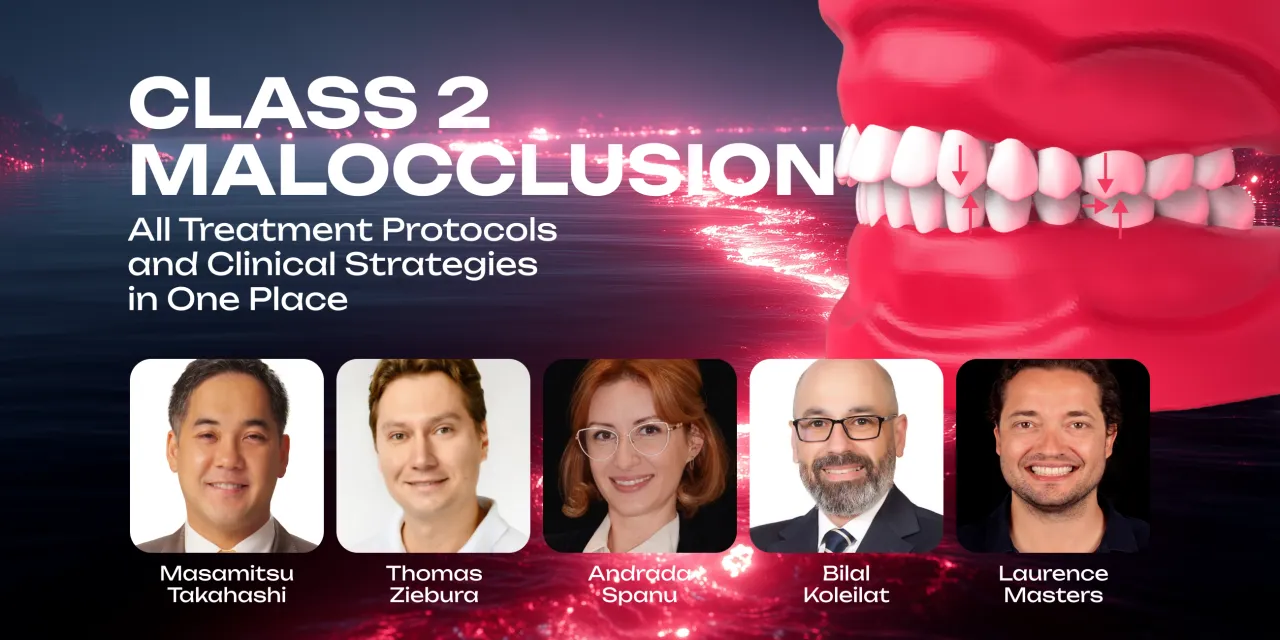
Class 2 malocclusion is not a single problem — it is a spectrum of skeletal, dental, and vertical discrepancies that demands precision, strategy, and clinical adaptability. This comprehensive program brings together all major treatment philosophies, mechanics, and decision-making frameworks into one unified clinical system. From growth modification in developing patients to camouflage strategies in adults, every phase of Class 2 therapy is dissected through a biomechanics-driven and case-based lens to transform complexity into structured predictability.
Learning Objectives
-
Utilize diagnostic frameworks for identifying skeletal, dental, and vertical discrepancies.
-
Implement growth modification strategies during the pubertal growth phase.
-
Apply camouflage mechanics for adult Class 2 correction.
-
Manage vertical dimension control and understand its impact on facial aesthetics and stability.
-
Master the biomechanics of intermaxillary elastics, functional appliances, and fixed appliances.
-
Execute the clinical application of TADs for anchorage control and complex tooth movements.
-
Navigate extraction vs non-extraction decision-making in Class 2 cases.
-
Develop strategies for achieving long-term stability, function, and aesthetic balance.
Target Audience
This course is designed for dental professionals seeking advanced clinical strategies, biomechanics-driven protocols, and decision-making frameworks for managing skeletal, dental, and vertical discrepancies in both growing and non-growing patients. Best for Orthodontists, Pediatric Dentists, and Restorative Dentists.
Topics
Lesson 1. Gummy Smile Management in Class 2 Malocclusion
-
Diagnosis and assessment of the need for vertical control
-
Methods of vertical dimension control: advantages and disadvantages
-
Vertical control of anterior teeth. Improvement or prevention of gummy smile
-
Treatment approaches for gummy smile correction
-
Clinical application of high-pull J-hook headgear
-
Application of 2×4 intrusion arch mechanics
-
Influence of TAD vertical position on the occlusal plane
-
Extraction treatment mechanics in Class 2 cases
Lesson 2. Class 2 and Vertical Dimension Control in Orthodontic Treatment
-
Diagnosis and assessment of the need for vertical control
-
Influence of TAD vertical positioning on the occlusal plane
-
Effect of lever arm length on incisor inclination
-
Relationship between TAD vertical position, lever arm length, incisor inclination, and overbite
-
Methods for controlling the vertical dimension of occlusion: advantages and disadvantages
-
Vertical control of the molar region
-
Difference between intrusion by rotation of occlusal plane applying biomechanics and absolute intrusion
-
Effect of the vertical position of TADs on the inclination of the occlusal plane
-
Retention and relapse following vertical dimension control
Lesson 3. Camouflage Treatment of Class 2 Malocclusion: Clinical Protocols
-
Retraction of upper anterior teeth in Class 2 cases and associated facial profile changes
-
Functional appliance therapy strategies in growing patients
-
Protocols for Class 2 correction using intermaxillary elastics
-
Clinical application and biomechanics of Herbst and Herbst-type appliances
-
Elastic-supported and hybrid Herbst appliance derivatives
-
Treatment protocols for Class 2 Division 2 malocclusions
Lesson 4. The Role of TADs in Class 2 Orthodontic Treatment
-
Protocols for Class 2 correction through molar distalization techniques
-
Design and customization of distalization mechanics protocols
-
Posterior anchorage reinforcement strategies and stabilization techniques
-
En-masse retraction protocols for anterior teeth control
-
Sagittal correction protocols through molar intrusion mechanics
Lesson 5. Role of CBCT in Class 2 Malocclusion Diagnosis and Treatment Planning
-
Tooth angulation in relation to the alveolar bone using CBCT
-
Correlation between CBCT and cephalometric (teleradiographic) analysis
-
Assessment of bone limitations based on CBCT findings
-
Extraction vs distalization for camouflage treatment: CBCT-based decision-making process
-
Root resorption: assessment and implications on CBCT imaging
-
Finishing phase guided by CBCT evaluation
-
Temporomandibular disorders (TMD) assessment using CBCT
Lesson 6. Vertical Dimension and Occlusal Plane Control in Class 2 Malocclusion Treatment
-
Role of vertical dimension and occlusal plane angulation in Class 2 diagnosis and treatment planning
-
Cephalometric and clinical indicators of vertical excess and deficiency in Class 2 cases
-
Influence of occlusal plane control on mandibular positioning, facial aesthetics, and long-term stability
-
Comparison of conventional, skeletal anchorage–assisted, and hybrid vertical control approaches
-
Biomechanical strategies for vertical dimension control using fixed appliances, aligners, and TADs
-
Effects of vertical control on soft tissue harmony and smile aesthetics
-
Case-based applications of occlusal plane modification in Class 2 correction
-
Integration of vertical control principles in comprehensive treatment planning for adolescent and adult patients
Lesson 7. Simplified Mechanics for the Treatment of Class 2 Malocclusion in Growing and Non-Growing Patients
-
Etiology of Class 2 malocclusion with emphasis on occlusal plane and mandibular deficiency
-
Treatment principles in growing vs non-growing patients: diagnostic differentiation and decision-making
-
Early use of intermaxillary elastics and bite ramps in Class 2 deep bite and open bite cases
-
Vertical and transverse control strategies in Class 2 correction
-
Functional appliance therapy during the pubertal growth spurt for skeletal modification
-
Fixed appliance strategies in non-growing patients: extraction and non-extraction protocols
-
Use of TADs in severe non-growing Class 2 cases
-
Simplified biomechanics: reduced wire sequences and non-compliance treatment approaches
-
Clinical case applications:
-
Deep bite and severe overjet in growing patients
-
Deep bite with gummy smile in growing patients
-
Class 2 subdivision cases in growing patients
-
Class 2 treatment with premolar extractions in non-growing patients
-
Class 2 non-extraction treatment with TADs in non-growing patients
-
Class 2 treatment with extractions and gummy smile correction in non-growing patients
-




Reviews
There are no reviews yet.