Description
+ Include: videos + file sub vtt, size: GB
+ Target Audience: primary care physicians, dermatologists, geriatric physicians, cardiologists
+ Sample video: contact me for sample video
+ Information:
1. Overview
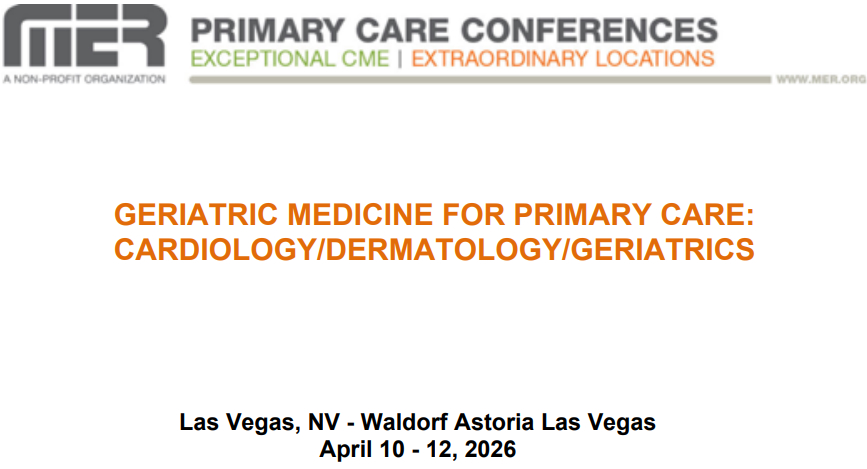
The “Geriatric Medicine for Primary Care: Cardiology/Dermatology/Geriatrics” conference is a program organized by Medical Education Resources (MER), a non-profit organization. The event is scheduled to take place from April 10-12, 2026, at the Waldorf Astoria Las Vegas in Las Vegas, NV.
2. Learning Objectives
Upon completion of this program, participants should be better able to:
-
Utilize a comprehensive geriatric assessment to identify potential issues in the elderly patient.
-
Recognize and manage geriatric depression.
-
Diagnose and treat cognitive impairment, dementias, and Alzheimer’s disease.
-
Discuss strategies for the management of difficult behaviors in patients with dementia without the use of psychotropic medications.
-
List special considerations for treating arrhythmias in the geriatric population.
-
Recognize and manage the unique challenges of the geriatric heart failure population.
-
Implement lifestyle changes as well as lipid and cholesterol guidelines for the prevention of CAD.
-
Explain current concepts in the diagnosis and treatment of hypertension.
-
Differentiate benign and malignant skin tumors and employ appropriate interoffice procedures.
-
Detect pre-cancerous and cancerous skin lesions.
-
Perform a differential diagnosis of common bacterial skin infections and recommend appropriate treatment.
-
Compare the different treatment options for fungal skin infections and nail infections.
3. Target Audience
This program is targeted to office-based primary care providers and other health professionals with updates in primary care medicine.
4. Topics
Geriatrics
-
Approach to the Geriatric Patient: The demographics of aging and the physiologic changes in the elderly patient. Medication use in the elderly including changes in age-related pharmacokinetics and pharmacodymamics and medication adherence. Review of risky medications often used in elderly patients.
-
Depression: Considerations in Older Adults: Overview of depression as a common condition often seen in primary care. The many ways depression negatively impacts other healthcare issues. Simple methods of recognition and managing depression in the primary care setting that can greatly improve the comfort, function, and the quality of life for older adults.
-
Alzheimer’s & Other Dementias: Review of normal age-related changes in cognitive function as well as disorders of memory and cognition as part of dementing illness. Mental status exams, including their limitations in evaluating memory. Various types of dementia and the importance of an accurate diagnosis. Current treatment options for various kinds of dementia. Potentially reversible dementias. The responsibilities of healthcare providers in managing patients with dementia.
-
Managing Behavior Problems in Dementia Patients: Review of common behavior disorders often seen in patients with dementia. Behavioral techniques which have shown to be effective in managing some of the behavior disorders in patients with Alzheimer’s and other dementias, focusing on the management of these patients without the use of psychotropic medications. Examples of behavior disturbances along with the behavior management technique which was effective in managing the patient with the behavior problem. Review of the potential adverse effects of the psychotropic medications usually used to manage behavior.
Cardiology
-
Arrhythmia Management in the Geriatric Population: Types and symptoms of arrhythmias. Approach to the patient. When to refer, when to admit. Atrial fibrillation and anticoagulation issues. Ventricular arrhythmias – when are they serious?.
-
Heart Failure Update with a Focus on the Elderly: Diagnostic and management challenges in the geriatric population, new therapies for systolic HF, home-based management, end-of-life care for a CHF patient.
-
Primary & Secondary Prevention of CAD: Definitions. AHA/ACC and other lipid guidelines updates. HDL Cholesterol: The good cholesterol?. Metabolic syndrome and/or obesity. Who needs treatment and how much. The role of lifestyle changes, exercise and cardiac rehabilitation. Drug therapy updates. Risk calculation.
-
Hypertension: The 2017 AHA/ACC Hypertension Guidelines. The 2024 ESC Guidelines for hypertension. Approaches to treatment thresholds and goals. Choices for initial and combination therapy. Resistant hypertension. Treating special populations: diabetics, the elderly, patients with renal failure.
Dermatology
-
Benign Skin Tumors: Proper diagnosis and treatment of common benign tumors. Biopsies and histopathologic examination. Nevi, seborrheic keratosis keloids, hemangiomas and miscellaneous tumors. When to refer.
-
Premalignant and Malignant Skin Tumors: Recognition of precursors of malignancies. Excisional and punch biopsies. Actinic keratosis, Bowen’s disease, squamous cell carcinoma, basal cell carcinoma, melanoma and other selected tumors. Risk reduction education.
-
Bacterial Infections of the Skin: Impetigo, ecthyma, foliculitis, furunculosis, necrotizing fasciitis, Lyme disease, syphilis; diagnosis and management. Guidelines for antibiotic treatment. Management of special populations.
-
Fungal Infections of the Skin: Dermatophytes, tinea versicolor, candidiasis. Selected deep fungal infections. Onycholysis. Drug induced nail changes. Paronychia, koilonychia, nail discolorations, tumors of the nail. Fungal infections diagnosis and management. Overview and comparison of antifungal treatment options.




Reviews
There are no reviews yet.