Description
+ Include: videos + file sub vtt + pdf, size: GB
+ Target Audience: family medicine physicians, primary care physicians
+ Sample video: contact me for sample video
+ Information:
Melanie J. Chandler, Ph.D., Dona E. Locke, Ph.D. and Anni L. Shandera-Ochsner, Ph.D., L.P.
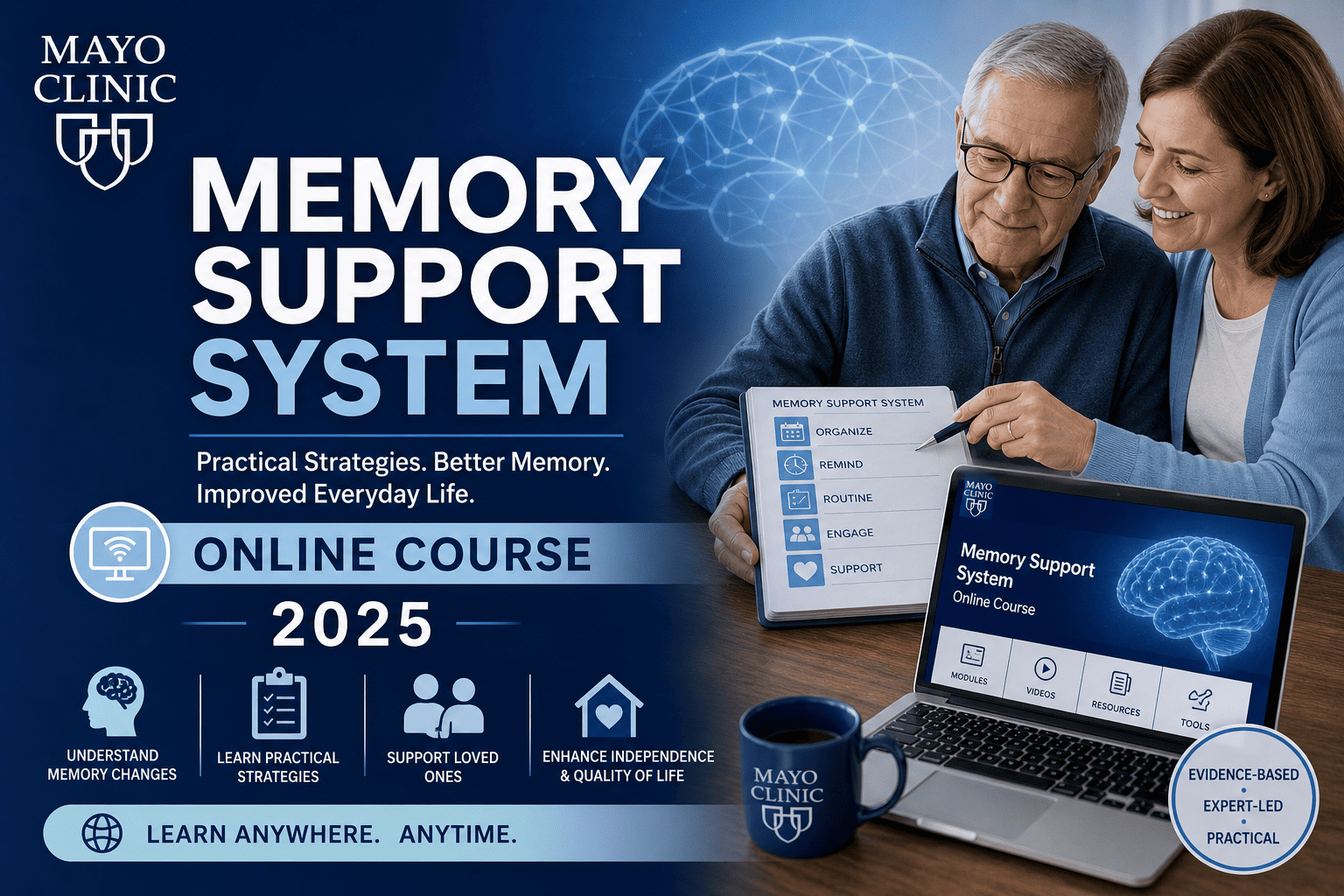
The memory compensation training described in this course was developed for people with a diagnosis of mild cognitive impairment (MCI). The training is centered on a memory support system (MSS) and one of the components of HABIT Healthy Action to Benefit Independence & Thinking ® program. The memory support system can help patients have a productive and satisfying life following a diagnosis of MCI.
Target Audience
This course will prepare clinicians to work one-on-one with patients and their support partners to help them create a habit of using the HABIT Day Planner to help them adapt to their cognitive impairment and promote functional independence.
Learning Objectives
Utilization of this Mayo Clinic online course does not indicate nor guarantee competence or proficiency in the performance of any procedures which may be in this course.
- Describe the different resources and tools used to train the Participant and their Support Partner in using the HABIT MSS
- Demonstrate how to use the HABIT MSS
- Create a plan to individualize the application of the HABIT MSS to maximize its utility for the Participant
- Demonstrate meta-memory and problem-solving skills to support functional independence
- Implement strategies to motivate Participant and Support Partner to adopt the MSS and continue use after completion of training
+ Topics:
Module 1 – Foundations & Assessments
- Daily Use Survey
- HABIT Compliance Assessment
- HABIT IPQs
- HABIT Scope Sequence
- Session Notes
- Session Workbook
Module 2 – Scheduling & Calendar Basics
- Entering Schedule for the Day
- Forwarding a Task Further Into the Future
- Forwarding an Incomplete Task
- Indicating High Priority Items
- Introducing Scheduled Events and Appointments
- Introducing the Notes (Journal) Section
- Introducing To Be Done
- Making a Dinner Reservation
Module 3 – IPOS & Support Process
- Asking Add
- Asking App
- Asking Aqq
- Assigning
- HABIT IPQs
- Intro to IPOS
- Preparing
- Review
- Support
Module 4 – Support Partner Strategies
- Adult Child as Support Partner
- Assessing Current Calendar and Systems
- Challenging Relationship Dynamics
- Creating a New Habit
- Digital Calendars
- Disengaged Support Partner
- Frustrated and Overwhelmed Participant
- Re-Directing a Disinterested Support Partner
- Setting Daily Goals
- Support Partner Prefers Other System
Module 5 – Routine Development
- Adding Daily Routines
- Participant Resistant to Using the System
- Transferring Prior Systems into MSS
Module 6 – Task Management
- Breaking Down a Complex Task
Module 7 – Demonstrations & Case Responses
- Bill – Demonstration with Dr. Shandera
- Bill – Response from Dr. Chandler
- Bill – Response from Dr. Locke
- David – Response from Dr. Chandler
- David – Response from Dr. Locke
- James – Response from Dr. Chandler
- James – Response from Dr. Locke
- Martha – Response from Dr. Chandler
- Martha – Response from Dr. Locke
- Roxane – Response from Dr. Chandler
- Roxane – Response from Dr. Locke
- Santiago – Response from Dr. Chandler
- Santiago – Response from Dr. Locke
- Stella – Response from Dr. Chandler
- Stella – Response from Dr. Locke
- Training – Introduction from Dr. Chandler
- Training – Introduction from Dr. Locke
Bonus Materials
- Quiz / Assessment Included



Reviews
There are no reviews yet.