Description
+ Include: 48 videos + 48 file sub vtt + 54 pdfs, size: 7 GB
+ Target Audience: neurologists and stroke specialists
+ Sample video: contact me for sample video
+ Information:
1. Overview
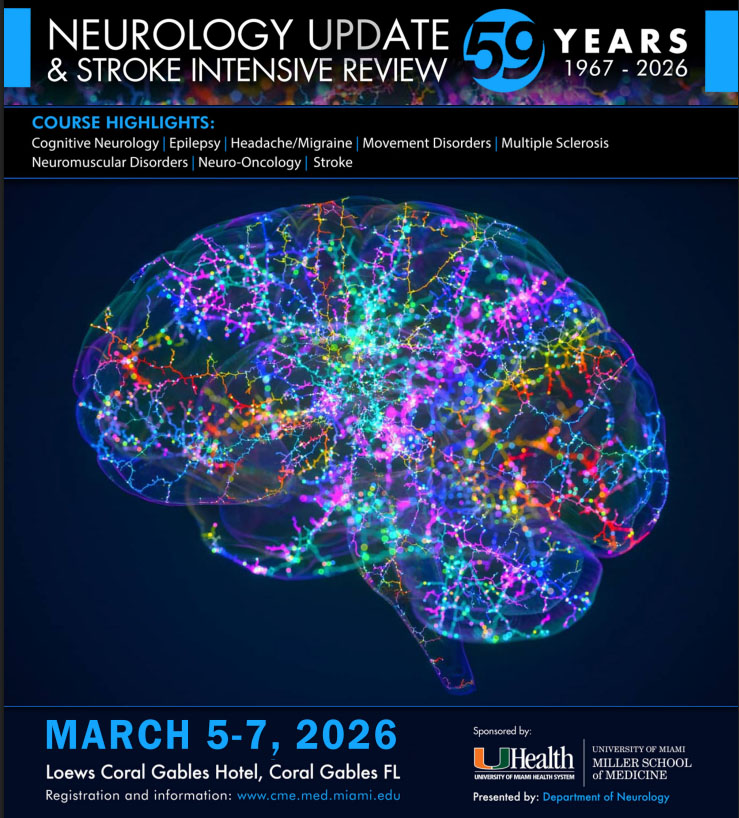
The 59th Annual Neurology Update and Stroke Intensive Review 2026 provides clinicians with a comprehensive review of the most recent developments in the diagnosis and management of neurologic disorders, including stroke, cognitive neurology/brain health, epilepsy, multiple sclerosis (MS), movement disorders, neuromuscular disorders, headache/migraine, neuro-oncology, sleep disorders and general neurology. Challenging diagnostic and therapeutic questions will be raised in each session around representative clinical vignettes, targeted reviews of the topic by the faculty and panel discussions. Exchange of information between faculty and attendees will take place during questions and answers sessions after each presentation as well as round table and panel discussions.
Course Date: Thursday, March 5, 2026, 8:00 AM – Saturday, March 7, 2026, 6:00 PM, Loews Coral Gables, Miami, FL
2. Learning Objectives
- By evaluating a detailed semiology, physicians will be able to more clearly distinguish the underlying etiology of paroxysmal psychiatric or behavioral symptoms.
- Assess and anticipate potential risks of misdiagnosis and delay in proper treatment implementation.
- Expand understanding diagnosis, novel therapeutics and evolving pathophysiology.
- Integrate novel therapies into individualized care plans to reduce disability.
- Assess the nuances in the diagnostics and management of meningiomas.
- Improve the understanding of neurologic complications of cancer treatment and drug delivery.
- Differentiate cancer immunotherapy–related myopathies from other inflammatory and toxic myopathies.
- Recognize clinical red flags for life-threatening overlap presentations (myositis, myocarditis, myasthenia gravis)
- Improve diagnostic accuracy when distinguishing PD from atypical parkinsonism using practical algorithms and bedside red flags; reduce inappropriate testing; initiate earlier, condition-specific counseling and care plans.
- Strengthen bedside recognition of movement phenomenology through case videos; apply structured diagnostic frameworks; initiate first-line management or referral when indicated.
- Identify and appropriately utilize high-efficacy therapies early in the disease course, optimizing long-term outcomes and reducing relapse-related morbidity in patients with MS.
- Improved awareness and early recognition of immune-related neurological adverse events will facilitate timely interventions, thereby reducing morbidity in affected patients.
- Apply current diagnostic strategies to distinguish benign conditions such as migraine aura or visual snow from urgent ischemic causes of transient visual loss.
- Define the 2023 revisions to the AAN brain death criteria.
- By following the National Institute on Aging- Alzheimer Association criteria for Alzheimer’s disease, Mild cognitive impairment due to Alzheimer’s disease, and presymptomatic Alzheimer’s disease, clinicians will be able to accurately diagnose this disorder.
- By following the McKeith criteria for Dementia with Lewy Bodies and Mild Cognitive Impairment due to DLB, clinicians will be better able to recognize and diagnose this disorder.
- Understand the use and value of the different imaging modalities used in the diagnosing Cervical Spondylotic Myopathy.
- Properly identifying those patients who are at risk for a spinal cord injury.
- Describe factors believed to be contributory to cognitive difficulties and guidelines to address them.
- Understand a variety of psychotherapeutic techniques that can promote a better quality of life and treatment outcomes for patients with neurological conditions.
3. Target Audience
Best for neurologists and stroke specialists who want updates on acute stroke management, neurodegenerative diseases, and novel therapeutics.
Specialties – Alzheimer’s/Cognitive Disorders, Epilepsy, General Neurology, Headache/Migraine, Movement Disorders, Multiple Sclerosis, Neurology, Neuromuscular Diseases, Neuro-Oncology, Neuropsychology, Neurosurgery, Sleep Medicine, StrokeProfessions – General Neurologist
4. Topics
-
01 Differential diagnosis I- ictal psychiatric symptoms versus primary psychiatric disorder
-
02 Differential diagnosis II- semiology findings- functional-dissociative seizures versus epileptic seizure
-
03 Management of antiseizure medications in functional-dissociative seizures- from tapering to impact o…
-
04 Steps in the initial management of functional-dissociative seizures- diagnosis delivery, driving, motivat…
-
05 Meningioma Nuances in diagnostics and management
-
06 Gliomas- Recent Advances and Future Directions
-
07 Enhancing drug delivery across the blood-brain barrier
-
08 Shifting Perspective and Biases in Brain Tumor Care
-
09 What is new in headache medicine
-
10 Advances in Acute and Preventive Treatment of Migraine
-
11 Refractory Headache Disorders
-
12 Interventional procedures for TGN
-
13 Recognition and Management of Neuromuscular Complications of Cancer Immunotherapy
-
14 Diagnostic Approaches to Demyelinating Neuropathies
-
15 Qalsody (tofersen) in ALS- Clinical Outcomes and Practical Management
-
16 Changing the Trajectory- Disease Modifying Therapies for Childhood Neuromuscular Disorders
-
17 Clinically differentiating Parkinsons Disease
-
18 Interdisciplinary care best practices in Parkinsons D aPD
-
19 Breakthroughs in PD Care Stem Cells FUS and Studies for MSA PSP
-
20 Case series presentation – applied diagnosis
-
21 Current and Pipeline therapies for Multiple Sclerosis
-
22 Current Long-Term Therapies for Neuromyelitis Optica Spectrum Disorder (NMOSD)
-
23 Recognizing Neurological Complications of Checkpoint Inhibitor Therapy
-
24 Understanding Autoimmune Encephalitis
-
25 Improving the diagnosis treatment and prevention of Alzheimers Disease
-
26 Improving the diagnosis and treatment of Dementia with Lewy Bodies
-
27 Improving the diagnosis and management of mixed etiology dementia
-
28 Evidenced based therapeutic and lifestyle interventions for movement disorders
-
29 Specific psychotherapeutic considerations for patients with neurological conditions
-
30 What do I tell my patient with epilepsy-
-
31 Slowing down the aging clock Sleep and other lifestyle interventions that work and do not work
-
32 Diagnostic dilemmas and challenging differential diagnoses- Can AI help-
-
33 Visual Disturbances in Neurology- Clinical Spectrum and Pathophysiology Insights
-
34 Cervical Spondolytic
-
35 Brain Death- Current Definition and Controversies
-
36 Introduction to Sports Neurology and a Multidisciplinary Approach with Neuropsychology in the Man…
-
37 What is New in Thrombolysis Extended Time Window and Special Situations
-
38 Pushing the Boundaries of Endovascular Therapy- Rescue Strategies and Practical Considerations
-
39 Contemporary Management of Mild Stroke and TIA- Evolving Concepts in Therapy and Prevention
-
40 Antithrombotic Therapy Across the Stroke Continuum- Acute, Subacute, and Secondary Prevention
-
41 The Role of Carotid Revascularization in Stroke Prevention
-
42 Ischemic Stroke Evidence-Based Updates
-
43 Panel Discussion Challenging Cases in Stroke Management. Part I
-
44 Acute Stroke Processes of Care- From Triage to Discharge Video Not Release
-
45 Updates on the Medical Management of Intracerebral Hemorrhage
-
46 Post-Stroke Rehabilitation- Management of Spasticity Video Not Release
-
47 Updates on the Surgical Management of Spontaneous Intracerebral Hemorrhage and Subdural Hemat…
-
48 Nursing Management in Acute Stroke Dos and Do Nots Video Not Release
-
49 Stroke in Young Adults- Women, Pregnancy, and Special Considerations
-
50 Stroke in the Young- Management of Cervical Artery Dissection
-
51 Panel Discussion- 2026 Updates on Management of Stroke-Related Symptoms Video Not Release
-
52 Stroke in the Young- Management of Cerebral Venous Sinus Thrombosis
-
53 Panel Discussion- Challenging Cases in Stroke Management. Part II Video Not Release


Reviews
There are no reviews yet.