Description
+ Include: 7 videos + 47 pdfs, size: 18 GB
+ Target Audience: otolaryngologists
+ Sample video: contact me for sample video
+ Information:
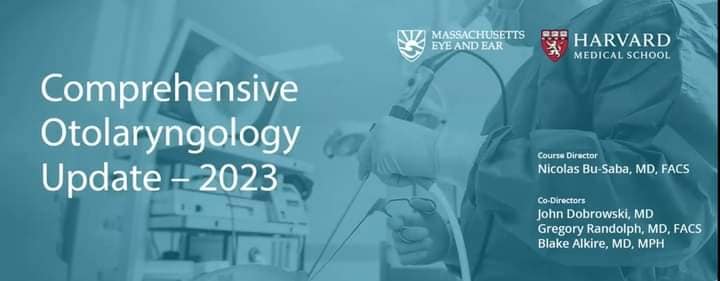
Harvard Comprehensive Otolaryngology update 2023
Upon completing this activity, participants will gain the following abilities:
Recognize aerosol-generating procedures that are specific to otolaryngology practice, including those that may pose a risk of COVID-19 transmission.
Demonstrate understanding of the policies and procedures required to deliver effective and safe otolaryngologic care during the COVID-19 pandemic, including measures to reduce the spread of infection among patients and staff.
Apply knowledge of endotypes and phenotypes of chronic rhinosinusitis (CRS) with and without nasal polyposis to develop a tailored treatment plan and understand the role of biologics in its treatment.
Interpret paranasal sinus imaging, identify surgical anatomy, and recognize anatomic variants that may increase the risk of operative complications during endoscopic sinus surgery.
Understand the role of intra-operative navigation during endoscopic sinus surgery and select appropriate surgical tools and devices to improve outcomes.
Recognize intra-operative complications during endoscopic sinus surgery and develop plans to handle them safely.
Perform a comprehensive work-up of patients presenting with sleep-disordered breathing (SDB), order appropriate testing, and understand the role of drug-induced sleep endoscopy (DISE) in diagnosing the cause of SDB.
Discuss surgical treatment options for patients with obstructive sleep apnea (OSA) based on the understanding of airway anatomy and areas of collapse, as determined by office examination and DISE.
Develop a tailored upper airway surgical plan, recommend appropriate treatment, and select patients who are candidates for upper airway stimulation.
Discuss the work-up of head and neck squamous cell carcinoma (HNSCC) with an unknown primary and recognize the role of positron emission tomography (PET) scan in its diagnosis and staging.
Define the role of human papillomavirus (HPV) in HNSCC, including its impact on treatment choice and prognosis.
+ Topics:
Day 1 Part 1.mp4
Day 1 Part 2.mp4
Day 2 Part 1.mp4
Day 2 Part 2.mp4
Day 3.mp4
Day1-Lecture01-Dr.BenjaminBleierSlides.pdf
Day1-Lecture02-Dr.NeilBhattacharyyaSlides.pptx
Day1-Lecture03-Dr.HillaryKellySlides.pptx
Day1-Lecture04-Dr.AliceMaxfieldSlides.pdf
Day1-Lecture05-Dr.GeorgeScangasSlides.pptx
Day1-Lecture06-Dr.AlessandroVariniSlides.pdf
Day1-Lecture06-Dr.AlessandroVariniVideo1.mov
Day1-Lecture06-Dr.AlessandroVariniVideo2.mp4
Day1-Lecture07-Dr.StaceyGraySlides.pdf
Day1-Lecture08-Dr.RalphMetson.pptx
Day1-Lecture10-Dr.NoahSiegelSlides.pdf
Day1-Lecture11-Dr.NicolasBu-SabaSlides.pptx
Day1-Lecture12-Dr.JohnDobrowskiSlides.pptx
Day1-Lecture14-Dr.BTuckerWoodsonSlides.pdf
Day1-Lecture15-Dr.PhillipHuyettSlides.pptx
Day1-Lecture16-Dr.RobinLindsaySlides.pptx
Day1-Lecture17-Dr.LindaLeeSlides.pdf
Day1-Lecture18-Dr.WaisRahmatiSlides.pptx
Day1-Panel1-Dr.ReganBergmarkSlides.pptx
Day2-Lecture01-Dr.MatthewCrowsonSlides.pptx
Day2-Lecture02-Dr.ElliottKozinSlides.pptx
Day2-Lecture03-Dr.AliciaQuesnelSlides.pdf
Day2-Lecture04-Dr.DavidJungSlides.pdf
Day2-Lecture05-Dr.DanielLee.pptx
Day2-Lecture06-Dr.BradWellingSlides.pptx
Day2-Lecture07-Dr.DennisPoeSlides.pptx
Day2-Lecture08-Dr.SteveRauchSlides.pptx
Day2-Lecture09-Dr.MargaretKennaSlides.pptx
Day2-Lecture10-Dr.LeilaMankariousSlides.pptx
Day2-Lecture11-Dr.AndrewScottSlides.pdf
Day2-Lecture12-Dr.GillianDiercksSlides.pdf
Day2-Lecture13-Dr.MichaelCohenSlides.pdf
Day2-Lecture14-Dr.DonaldKeamySlides.pptx
Day2-Lecture15-Dr.PhillipSongSlides.pdf
Day2-Lecture16-Dr.RamonFrancoSlides.pdf
Day2-Lecture17-GlennBunting.pptx
Day2-Panel2-Dr.deVeneciaSlides.pptx
Day3-Lecture01-Dr.MaryBethCunnane.pdf
Day3-Lecture02-Dr.JeremyRichmonSlides.pdf
Day3-Lecture03-Dr.DerrickLinSlides.pptx
Day3-Lecture04-Dr.DanielDeschlerSlides.pdf
Day3-Lecture05-Dr.MarkVarvaresSlides.pdf
Day3-Lecture06-Dr.MatthewNaunheimSlides.pdf
Day3-Lecture07-Dr.KevinEmerickSlides.pptx
Day3-Lecture08-Dr.DavidShayeSlides.pptx
Day3-Lecture09-Dr.LeslieEldeirySlides.pptx
Day3-Lecture10-Dr.PaulKonowitzSlides.pptx
Day3-Lecture11-Dr.GregRandolphSlides.pptx
Day3-Lecture12-Dr.PeterSadowSlides.pdf


Reviews
There are no reviews yet.